
In Dubai’s extreme heat and humidity, HVAC systems are essential for comfortable indoor environments. Suction pressure, the refrigerant pressure entering the compressor, is crucial for system efficiency. High suction pressure can signal refrigerant imbalances, airflow restrictions, or mechanical issues, leading to higher energy bills and reduced cooling. Understanding what causes high suction pressure HVAC helps prevent costly repairs, maintain air quality, and ensure safe, efficient operation.
1. Understanding Suction Pressure in HVAC Systems
Suction pressure measures the refrigerant pressure returning to the compressor and indicates how efficiently an HVAC system absorbs indoor heat. Normal ranges are 25–40 psi for residential and 30–45 psi for commercial systems, depending on refrigerant type and temperature.
High suction pressure can reduce efficiency, increase energy bills, and risk system damage. Technicians use gauges or digital sensors for accurate monitoring, following ASHRAE standards to ensure safe, reliable operation. In Dubai, regular HVAC maintenance by certified professionals helps prevent high suction pressure and maintain optimal performance.
2. Common Causes of High Suction Pressure HVAC
High suction pressure in HVAC systems can disrupt performance, increase energy consumption, and lead to costly repairs. Understanding the root causes is essential for both homeowners and commercial facility managers in Dubai. Below, we break down the most common factors contributing to high suction pressure, along with examples of how they can affect different types of systems.
Refrigerant Issues: A primary cause of high suction pressure is improper refrigerant levels, such as overcharging or using the wrong type, which strains the compressor and reduces efficiency. Poor-quality refrigerants can also raise energy consumption and affect cooling performance. For example, overcharged residential units may have uneven cooling, while commercial chillers can experience accelerated compressor wear.
Airflow Restrictions: Restricted airflow is a common cause of high suction pressure, caused by dirty filters, blocked vents, clogged coils, or poorly designed ductwork. Reduced airflow forces the system to work harder, raising suction pressure and lowering efficiency. In homes, this can create hot spots, while in commercial spaces, it can strain the entire HVAC system.
Mechanical Failures: Mechanical issues like faulty compressors, expansion valves, or worn components can raise suction pressure by disrupting refrigerant flow. In commercial systems, a malfunctioning expansion valve can cause backups and efficiency loss, while in homes, worn compressors may fail prematurely. Regular professional inspections help detect and fix these problems early.
Environmental Factors: Dubai’s high humidity and extreme temperatures increase HVAC cooling loads, raising suction pressure and stressing the system. Older units are especially affected by temperature fluctuations that impact refrigerant performance. Regular seasonal monitoring and preventive maintenance help keep both residential and commercial systems efficient and safe.
3. Risks of High Suction Pressure
High suction pressure in an HVAC system is more than a technical concern it can have serious consequences for energy efficiency, system longevity, and occupant safety. Ignoring this issue can result in avoidable financial costs and even potential health risks, making it essential for Dubai homeowners and businesses to address the problem promptly.
Reduced HVAC Efficiency
When suction pressure rises above normal levels, the compressor must work harder to circulate refrigerant. This increased workload reduces the system’s cooling efficiency, leading to uneven indoor temperatures and higher energy consumption. Over time, this inefficiency translates directly into higher electricity bills and a greater carbon footprint.
Increased Wear and Tear
Sustained high suction pressure puts excessive stress on critical HVAC components, including compressors, expansion valves, and coils. This accelerated wear leads to more frequent repairs, increased maintenance costs, and a shortened system lifespan. For commercial systems, the cumulative impact can disrupt business operations and increase downtime, while residential units may require costly early replacements.
Potential System Breakdown and Safety Hazards
If left unaddressed, high suction pressure can cause sudden system failure. This not only results in expensive repairs but also poses safety hazards, such as refrigerant leaks or electrical issues. Poorly functioning HVAC units may also compromise indoor air quality, which can affect the health of occupants, particularly those with respiratory conditions.
4. Solutions to High Suction Pressure HVAC
Addressing high suction pressure in HVAC systems requires a combination of professional expertise, routine maintenance, and strategic upgrades. For both residential and commercial properties in Dubai, following these solutions can improve system efficiency, prevent costly breakdowns, and maintain safe indoor environments.
Professional Inspection and Diagnosis
- Certified HVAC Technicians: High suction pressure is often caused by complex factors that are not easily identifiable without professional assessment. Hiring certified HVAC specialists ensures accurate diagnosis and adherence to safety standards.
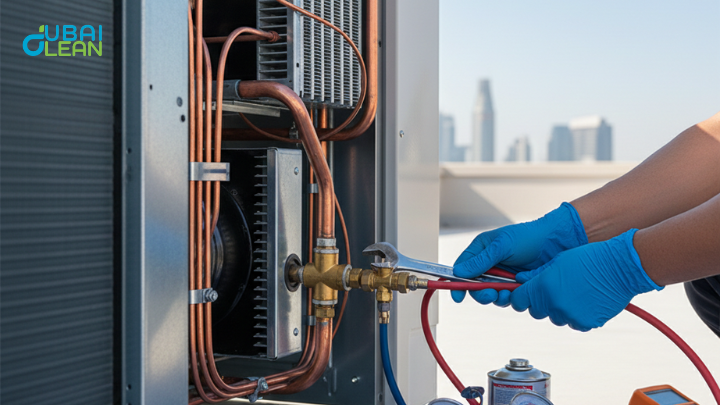
- Precision Tools: Technicians use advanced gauges and digital sensors to monitor suction pressure and refrigerant flow. These tools allow them to detect anomalies early, preventing long-term damage.
Correcting Refrigerant Levels
- Proper Refrigerant Charging: Ensuring the correct refrigerant type and quantity is critical. Overcharged or undercharged systems can elevate suction pressure, decrease efficiency, and strain compressors.
- Avoid DIY Handling: Refrigerants are hazardous and regulated by law. Attempting to adjust refrigerant levels without proper training can be dangerous and may void system warranties.
Improving Airflow
- Filter Replacement: Regularly changing air filters prevents dust and debris from restricting airflow and raising suction pressure.
- Duct Cleaning: Professional duct cleaning removes blockages and ensures smooth airflow throughout the system.
- Coil Maintenance: Cleaning evaporator coils allows refrigerant to absorb heat effectively, keeping suction pressure within optimal ranges.
- Balanced Venting: Ensure all vents are unobstructed and airflow is evenly distributed, particularly in multi-room commercial spaces.
Mechanical Repairs and Upgrades
- Repair or Replace Components: Malfunctioning compressors, expansion valves, or other critical parts should be repaired or replaced promptly to maintain optimal suction pressure.
- Energy-Efficient Upgrades: Consider upgrading to modern, energy-efficient HVAC systems that are designed to handle Dubai’s extreme climate while reducing the risk of recurring high suction pressure issues.
Additional Tips for Dubai Residents and Businesses
By combining professional inspection, proper refrigerant management, airflow improvement, and mechanical repairs or upgrades, you can effectively manage high suction pressure HVAC issues. These steps not only protect your HVAC investment but also enhance energy efficiency, reduce utility costs, and ensure safe, comfortable indoor environments.
- Schedule seasonal HVAC maintenance Dubai to prevent problems before they escalate.
- Keep a maintenance log to track pressure readings and repairs for professional reference.
- Educate occupants on avoiding airflow obstructions and maintaining filter cleanliness.
5. Preventive Measures
Preventing high suction pressure in HVAC systems starts with routine maintenance and early detection. For both residential and commercial properties in Dubai, following a structured preventive schedule ensures consistent performance, reduces energy costs, and prolongs system lifespan. Regular inspections by certified HVAC technicians help identify potential issues early and keep systems running safely and efficiently.
Routine Maintenance Schedule
- Residential Units: Schedule at least two professional HVAC inspections per year typically before summer and winter to clean filters, check refrigerant levels, and inspect system components.
- Commercial Units: Larger systems may require quarterly inspections, including duct cleaning, coil maintenance, and compressor evaluation, to prevent high suction pressure and avoid operational disruptions.
Seasonal Inspections
Extreme temperatures and humidity in Dubai can stress HVAC systems. Seasonal inspections help identify early signs of high suction pressure, refrigerant issues, or airflow restrictions, reducing the risk of costly repairs and unexpected system failure.
Monitoring HVAC Performance
Implementing these preventive measures not only protects your investment but also improves HVAC efficiency, maintains indoor air quality, and ensures safe, comfortable environments for occupants. Proactive care is the most effective way to avoid high suction pressure issues before they escalate.
- Smart Sensors & Mobile Apps: Many modern HVAC units provide live tracking of refrigerant levels, suction pressure, and overall energy use through connected sensors and apps.
- Professional Services: Partnering with certified HVAC technicians ensures accurate assessments and compliance with industry standards, such as those recommended by ASHRAE (American Society of Heating, Refrigerating and Air-Conditioning Engineers).
Conclusion
High suction pressure in HVAC systems can reduce efficiency, raise energy costs, and damage equipment. Understanding its causes from refrigerant and airflow issues to mechanical and environmental factors is vital for Dubai homes and businesses. Professional maintenance by certified HVAC technicians ensures safe, efficient operation and protects your system and investment.