
In Dubai’s arid climate, underground water tanks are common in villas and high-rises. While they provide reliable storage, without proper maintenance these tanks can become breeding grounds for bacteria, algae, and sediment. That’s why the Dubai Municipality mandates a minimum of twice-yearly tank cleaning—especially for underground systems used for drinking or cooking. When done properly, this procedure ensures safe, clean water and prevents regulatory fines.
Why Underground Tank Cleaning Matters in Dubai
- Prevents Health Risks: Stagnant water fosters bacteria like Legionella, along with algae, insects, and even rodents.
- Complies with Regulations: Dubai Municipality requires regular cleaning every six months; quarterly for sensitive sites like schools and hospitals.
- Enhances Water Quality: Removes sediment and improves clarity, taste, and safety.
- Extends Tank Life: Reduces corrosion and structural wear.
Recommended Cleaning Frequency
Guidelines for various facility types:
| Facility Type | Minimum Frequency | Recommended Frequency |
| Residential Villas | Every 6 months | Every 4 months |
| Apartment Buildings | Every 6 months | Every 4–6 months |
| Restaurants & Hotels | Quarterly | Every 3 months |
| Schools / Healthcare | Quarterly | Every 3 months |
| Older Tanks (10+ years) | Every 6 months | Every 4–6 months |
Frequency depends on usage volume, water quality issues, and Dubai’s hot, sandy environment
Choosing a Professional Cleaning Service
Important criteria when selecting a cleaning provider in Dubai:
- Must be licensed by Dubai Municipality with certified technicians.
- Use non-toxic, DM-approved cleaners—many now offer eco-friendly options.
- Offer full-service packages: inspection, cleaning, disinfection, water testing, and certification.
- Use proper equipment: high-pressure jets, vacuums, steam, and chlorination systems.
- Provide proof: before/after photos, lab results, certificates .
Step-by-Step Cleaning Procedure
1. Pre-Inspection & Preparation
Technicians inspect for leaks, cracks, sediment buildup, and gauge tank access. This identifies hazards and scope.
They also notify residents and switch off pumps.
2. Draining Water
Water is fully drained, often with submersible pumps. Wastewater must be disposed according to regulations.
3. Sediment & Sludge Removal
Manual scraping or vacuuming removes sludge, rust, and debris, ensuring the tank base is clean.
4. High-Pressure Cleaning
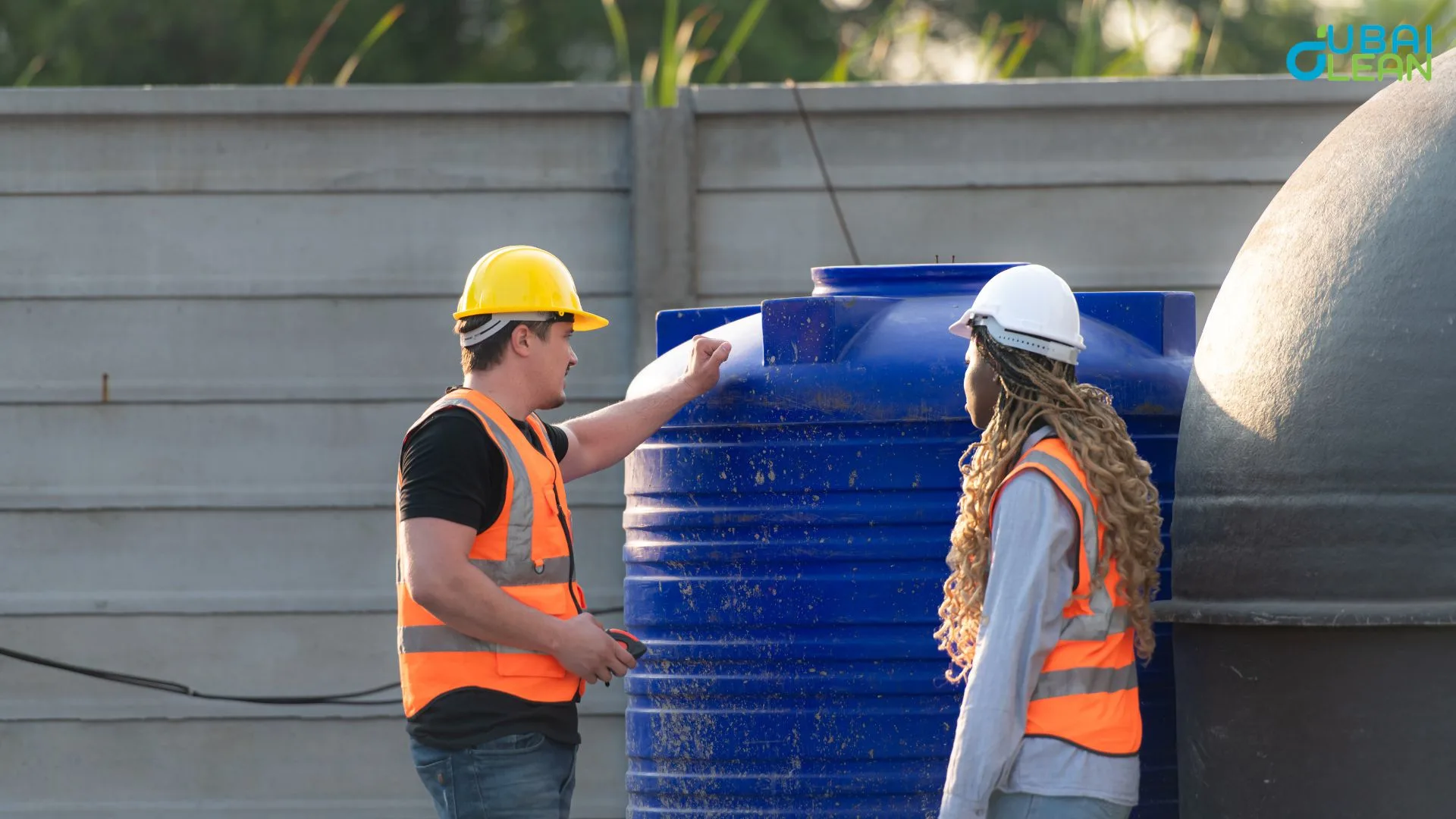
Walls and corners are cleaned using high-pressure jets and eco-friendly detergents to eliminate biofilm.
5. Scrubbing & Brushing
Manual scrubbing with non-metallic brushes ensures no residue remains, especially in hard-to-reach areas.
6. Chlorination / Disinfection
Tanks are disinfected using DM-approved chemicals, such as chlorine-based or biodegradable agents. For pipelines, residual chlorine of 1–2 mg/L is recommended.
7. Rinsing & Flushing
Multiple rinses ensure all disinfectants are removed. Final water quality meets safety standards before refilling.
8. Final Inspection & Refurbishment
Technicians check for structural integrity, apply minor repairs, and ensure vents and lids are secure .
9. Water Quality Testing
Optional but recommended—DM-approved labs test microbiological and chemical parameters. Common test fees start at ~AED150 per sample .
10. Refilling & Reporting
After water is replenished, providers hand over cleaning certificates and detailed reports for regulatory audits .
Cost Breakdown
Typical costs in Dubai for underground tank cleaning:
- 500–1000 gal: AED 700–850
- 1500–2000 gal: AED 900–1500
- Includes basic services; lab tests around AED 150.
Costs vary by tank material (RCC, GRP, steel), complexity, and added services like UV or pipeline chlorination.
Maintenance & Safety Tips
- Install vent screens or filters to reduce debris ingress.
- Schedule visual checks monthly and clean every 6–12 months.
- Use lab tests to monitor water for microbial or chemical changes.
- Ensure sealed lids to prevent pest or dust contamination.
- Use eco-friendly cleaning for resident health and sustainability.
DIY vs Professional Cleaning
DIY Pros: control, cost saving.
DIY Cons: safety risks (confined space, gases), lack of equipment, regulatory non-compliance.
Dubai guidelines strongly recommend professional cleaning, especially for underground tanks.
FAQ
Conclusion
Ensuring your underground water tank is clean isn’t just best practice—it’s essential for health, safety, and legal compliance in Dubai. Following a professional cleaning procedure means safer water, better tank performance, and peace of mind.
If your tank hasn’t been cleaned in over six months—or if you’ve noticed any discoloration, odor, or sediment—it’s time to call a licensed Dubai service provider like DubaiClean.