
Cleanliness in a restaurant isn’t just about appearance—it’s essential for customer trust, food safety, and health compliance. While staff usually handles daily cleaning, those routines often miss deeper, hidden grime. Areas like grease traps, exhaust hoods, and floor edges accumulate dirt that basic cleaning can’t reach. That’s when professional cleaning becomes necessary. Not every staff member is trained or equipped for deep cleaning tasks. Bringing in experts every few weeks or monthly ensures every corner is properly cleaned and the restaurant stays inspection-ready.
Understanding Restaurant Cleaning Needs
Cleaning a restaurant is very different from cleaning a home or office. In food service, hygiene isn’t optional—it’s a strict requirement. Unlike residential or general commercial cleaning, restaurant cleaning involves food-contact surfaces, kitchen equipment, ventilation systems, and waste areas that must meet health and safety codes.
Restaurants must follow strict guidelines set by local health authorities. These include using food-safe chemicals, maintaining sanitization logs, and ensuring areas like kitchens, restrooms, and dining spaces are cleaned to a professional standard. Failure to meet these standards can lead to failed inspections, fines, or even temporary closure.
Critical Zones in a Restaurant That Need Regular Cleaning
A clean restaurant requires more than just wiping down tables. Several areas must be cleaned regularly to maintain hygiene and safety:
Kitchen:
This is the heart of the restaurant and the most sensitive area. Cooktops, grills, fryers, utensils, cutting boards, and kitchen hoods accumulate grease and food particles quickly. Without proper and frequent cleaning, they become breeding grounds for bacteria and fire hazards.
Dining Area:
Tables, chairs, menus, and condiment stations are high-touch surfaces that customers interact with constantly. They should be sanitized multiple times a day to prevent the spread of germs.
Restrooms:
Restroom cleanliness directly impacts customer perception. Toilets, sinks, floors, and touchpoints like door handles must be cleaned and disinfected regularly.
Entry and Waiting Areas:
First impressions count. These areas collect dirt from foot traffic and should be swept, mopped, and dusted regularly to maintain a welcoming environment.
Daily, Weekly & Monthly Restaurant Cleaning Checklist
Not all cleaning tasks need to be done every day—but each has its time. A structured cleaning schedule helps maintain consistency, hygiene, and compliance with food safety standards.
Daily Tasks
- Wipe and sanitize tables, chairs, and menus
- Sweep and mop all floors (front and back)
- Clean and disinfect kitchen counters and prep areas
- Wash utensils, cutting boards, and cookware
- Empty trash bins and sanitize liners
- Clean restrooms (toilets, sinks, mirrors, and floors)
- Refill soap, sanitizer, and paper towels
- Clean grill, fryers, and stovetops at the end of service
Weekly Tasks
- Deep clean fridges and freezers
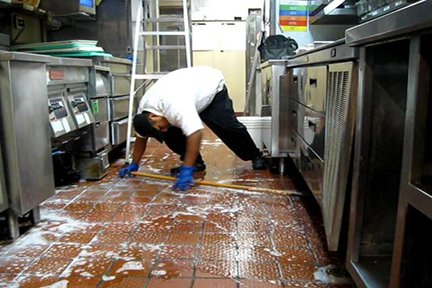
- Scrub floor tiles and grout
- Wipe down walls and baseboards
- Clean light fixtures and vents
- Wash reusable kitchen cloths and mop heads
Monthly Tasks
- Deep clean kitchen exhaust hoods and vents
- Empty and sanitize grease traps
- Check for mold or pest signs in hidden areas
- Clean behind heavy equipment (e.g., ovens, fridges)
- Inspect and deep-clean air conditioning vents
Recommended Tools & Products
- Food-safe sanitizers
- Degreasers for kitchen use
- Microfiber cloths and mop heads
- Scrubbing pads and grout brushes
- Disposable gloves and aprons
Grease, Vent & Hood Cleaning: Specialized Tasks
Grease buildup in kitchens isn’t just messy—it’s dangerous. Vents, hoods, and grease traps collect oil, smoke, and food residue during daily cooking. If left uncleaned, they can become serious fire hazards and hygiene violations.
Why Regular Cleaning Matters
Greasy vents reduce airflow and increase the risk of kitchen fires. Dirty hoods can drip oil onto food. Clogged grease traps may cause foul odors or plumbing issues. Regular cleaning helps your restaurant stay safe, compliant, and efficient.
Basic Cleaning vs Professional Help
Staff can handle surface-level cleaning—wiping down the exterior of hoods, replacing filters, and emptying accessible grease containers. However, deep cleaning the inside of exhaust ducts, heavy grease removal, and trap flushing requires professional-grade tools and certified techniques.
When to call a professional:
- You notice smoke not venting properly
- There’s a persistent grease smell
- It’s been over a month since the last deep clean
- You’re preparing for a health inspection
Staying on top of these specialized areas protects your staff, customers, and reputation.
Cleaning Supplies & Tools Every Restaurant Should Have
Running a clean restaurant starts with having the right tools and products on hand. From the kitchen to the dining area, proper cleaning depends on using effective, food-safe materials.
Essential Cleaning Tools
- Color-coded microfiber cloths – For different zones (kitchen, dining, restroom)
- Mop systems with separate rinse and wash buckets – To avoid cross-contamination
- Scrub brushes and grout tools – For floor and tile cleaning
- Squeegees and glass cleaners – For windows, mirrors, and glass doors
- Grease trap scoops and gloves – For safe handling of grease waste
- Spray bottles and labeled containers – For easy application and identification
Must-Have Cleaning Chemicals
- Food-safe surface sanitizers – For prep counters and dining tables
- Degreasers – For kitchen equipment and floors
- Dishwashing detergents – For utensils, pots, and pans
- Disinfectants – For restrooms and high-touch surfaces
- Drain cleaners – To prevent clogs and foul odors
Having a well-stocked cleaning station ensures tasks are done quickly, safely, and to standard—reducing risk and keeping the restaurant consistently clean.
Training & Cleaning Responsibilities for Staff
Even with the best tools, cleanliness depends on your team. Proper training and clear responsibilities ensure that nothing gets missed—and that cleaning is done correctly and safely.
Assigning Roles & Schedules
Every staff member should know what they’re responsible for, and when. Break down cleaning duties into daily, weekly, and monthly tasks, and assign them clearly—either by position (e.g., line cook, dishwasher) or shift.
Use printed or digital cleaning schedules to track progress. A visible checklist can help everyone stay on top of tasks and build accountability.
Staff Training Essentials
- How to use cleaning products properly (especially food-safe vs. toxic chemicals)
- How to sanitize vs. just clean (removing germs vs. removing dirt)
- What PPE to wear (gloves, aprons, eye protection where needed)
- Where to report issues like clogs, broken equipment, or pest signs
Avoiding Common Mistakes
- Skipping hard-to-reach areas
- Using the wrong chemical on food-contact surfaces
- Mixing incompatible cleaners
- Not following contact time on sanitizers
Trained staff keep your restaurant clean, safe, and compliant—without relying solely on external help.
Benefits of Hiring Commercial Cleaning Services
While in-house staff can handle daily cleaning, some tasks require professional support. Outsourcing to a commercial cleaning service can save time, reduce risks, and ensure deeper cleanliness—especially in high-risk areas like kitchens and restrooms.
When Outsourcing Makes Sense
- Deep cleaning is overdue or too complex for your team
- You need specialized services (grease trap, duct, hood cleaning)
- You’re preparing for a health inspection or reopening
- You want to reduce workload on staff during peak business hours
What to Look for in a Cleaning Company
- Experience with restaurant environments
- Use of food-safe, approved chemicals
- Flexible scheduling (after-hours or off-peak cleaning)
- Clear checklists and reporting systems
- Trained and certified staff (especially for vent or hood cleaning)
- Transparent pricing with no hidden fees
Hiring the right professionals not only boosts hygiene standards—it also gives restaurant owners peace of mind and protects their reputation.
Conclusion
Cleanliness is more than a routine task in the restaurant business—it’s a key factor in customer trust, food safety, and staff well-being. A consistently clean environment helps prevent health code violations and shows guests that you care about quality at every level.
Many restaurants rely on expert help to meet high cleaning standards. A trusted option is DubaiClean, offering deep kitchen, exhaust, and hood cleaning. With professional support, you keep your space clean, safe, and inspection-ready—without overloading your staff.