Category: Dubai Sofa Deep Cleaning

  • Professional Tips for Cleaning Your Sofa at Home Without Equipment

    Professional Tips for Cleaning Your Sofa at Home Without Equipment

    Many Dubai households prefer manual sofa cleaning because apartment living often comes with noise restrictions, limited space, and the need for quick, low-disruption maintenance. While online DIY hacks may seem convenient, random methods especially those using excess water or mixed chemicals can damage fabric, trap moisture, and negatively affect indoor air quality in air-conditioned homes. Safe sofa care isn’t just about appearance; it directly impacts hygiene, fabric longevity, and family health, particularly for children and allergy-sensitive residents.

    1. Understanding Sofa Fabric Before You Clean

    Before attempting sofa cleaning at home without equipment, it’s essential to identify the fabric type, as woven, synthetic, natural, and blended materials react differently to moisture and cleaning agents. Dubai’s heat, humidity, and fine dust can weaken fibers or trap dirt, making some sofas unsuitable for wet cleaning. Signs like color bleeding, stiffness, or delicate weaves indicate that aggressive cleaning could cause damage. Simple at-home checks, such as testing colorfastness in a hidden area and feeling the fabric for absorbency and texture, help ensure safe sofa cleaning at home without equipment.

    Why Fabric Identification Matters More Than Products

    Before attempting any manual cleaning, it’s crucial to identify your sofa’s fabric type, because the wrong approach can cause permanent damage. Woven fabrics, synthetics, natural fibers like cotton or linen, and blended materials each react differently to moisture, friction, and cleaning agents.

    Simple At-Home Fabric Safety Checks

    Even without specialized tools, you can quickly assess your sofa’s cleaning readiness. Colorfastness can be checked by lightly dabbing a hidden area with a damp cloth if color transfers, wet cleaning may be unsafe. Feeling the fabric can also reveal texture and absorbency, helping you decide whether moisture can be safely applied.

    2. Health & Hygiene Risks of Incorrect Sofa Cleaning

    Even sofas that look clean can hide dust mites, skin flakes, and allergens, which are common in Dubai homes due to dust and frequent use. Improper cleaning such as over-wetting or harsh scrubbing can spread bacteria instead of removing it, increasing health risks for children, the elderly, and asthma-sensitive residents. Overusing cleaning chemicals can also harm indoor air quality, leave residues, and cause odors, reducing hygiene and comfort. Using controlled, safe cleaning methods protects both your family’s health and your sofa’s longevity.

    Hidden Health Concerns Inside Sofas

    Even sofas that appear clean can harbor dust mites, skin flakes, and allergens, which are particularly common in UAE homes due to dust and high occupancy. Using improper cleaning methods like over-wetting, scrubbing harshly, or skipping thorough rinsing can spread bacteria and allergens instead of removing them. 

    Chemical Overuse Risks in Closed Indoor Spaces

    Many people assume that more cleaning products equals better results, but overusing chemicals can be harmful. In air-conditioned Dubai homes, excessive chemicals can linger, affecting indoor air quality and causing odors or sticky residues on fabric. These residues not only reduce hygiene but can also irritate sensitive skin or trigger allergic reactions.

    3. Professional-Grade Preparation Without Equipment

    Proper preparation is key to safe, effective sofa cleaning without equipment. Start by removing dust and debris using gentle, fabric-safe motions and separate cushions to ensure even hygiene. Cleaning in the direction of the fabric weave helps preserve texture and prevent damage. Create a safe home environment by ventilating the area, protecting nearby floors and furniture, and choosing the cooler parts of the day to clean, as Dubai’s heat and humidity can affect fabric drying. These steps lay the foundation for a professional-grade, risk-free cleaning process.
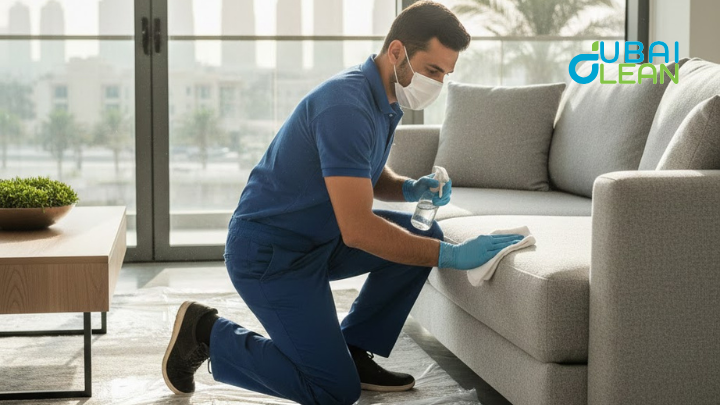
    Checking sofa fabric before cleaning

    Dry Surface Preparation Techniques

    Before cleaning, it’s important to remove surface dust and debris using gentle, fabric-safe motions that protect the fibers. Separating cushions allows for even hygiene across all areas, ensuring hidden dust or crumbs don’t remain. Cleaning in the direction of the fabric weave preserves texture and prevents wear, an often-overlooked step in many DIY methods.

    Creating a Safe Cleaning Environment at Home

    A safe cleaning environment is essential for both your sofa and your home. Make sure the area is well-ventilated to avoid spreading dust, and protect nearby floors and furniture from accidental spills or residues. Additionally, plan cleaning for the cooler parts of the day, as Dubai’s heat and humidity can affect fabric drying and cleaning efficiency. Proper preparation ensures a risk-free, professional-level cleaning result.

    4. Safe Manual Sofa Cleaning Methods Used by Professionals

    Safe manual sofa cleaning relies on low-moisture techniques that protect the fabric and structure. By gently refreshing the surface, professionals remove dust and light stains without soaking the material, preventing shrinkage or warping. Maintaining fabric tension ensures the sofa keeps its shape and durability over time. These controlled, minimal-moisture methods are especially important in Dubai’s heat and humidity, where over-wetting can damage the fibers. The result is a clean, hygienic sofa without risking structural or fabric harm.

    Low-Moisture Fabric Refreshing Techniques

    Using minimal moisture is essential to protect the sofa’s structure and prevent fabric shrinkage or warping. Professionals focus on surface-level sanitation, gently removing dust, dirt, and light stains without soaking the material. Preserving fabric tension ensures the sofa maintains its shape and durability over time, while still achieving a clean, hygienic surface. These controlled, low-moisture methods are particularly effective in Dubai homes, where heat and humidity can make over-wetting risky.

    5. Maintaining Hygiene Without Overcleaning

    Maintaining sofa hygiene without overcleaning is key to preserving both fabric and indoor health. Overcleaning can weaken fibers, while neglect allows dust, allergens, and bacteria to build up especially in Dubai’s dusty environment. Light cleaning weekly, with deeper refreshes every few months, helps maintain cleanliness. For persistent stains or odors, professional intervention is safer than aggressive home methods. Using neutral odor control instead of fragrances protects family health and keeps the sofa fresh without chemical risks.

    How Often Is Safe for Manual Sofa Cleaning?

    Finding the right cleaning frequency is essential to protect both fabric and hygiene. Overcleaning can weaken fibers, while neglect allows dust, allergens, and bacteria to accumulate. In Dubai, the frequent dust cycles make weekly light cleaning ideal, with deeper refreshes every few months. Watch for signs like persistent stains, odors, or fabric stiffness.

    Odor Control Without Artificial Fragrances

    Masking odors with fragrances may temporarily hide smells but can pose health risks, especially for children or allergy-sensitive residents. Professionals prefer neutralization techniques that eliminate odors without harmful chemicals. Ensuring proper ventilation and using safe, natural solutions helps maintain a fresh, safe indoor environment, protecting both family health and sofa integrity.

    6. When Home Cleaning Is Not Enough

    Sometimes, home cleaning isn’t enough to keep your sofa safe and hygienic. Persistent odors, skin irritation, fabric stiffness, or mold growth are signs that professional cleaning is needed. Delaying intervention can increase health risks for children, elderly family members, and allergy-sensitive residents, while also accelerating fabric damage. In Dubai’s dusty and humid environment, timely professional care ensures your sofa remains clean, safe, and durable for the long term.

    Warning Signs Your Sofa Needs Professional Help

    Sometimes, home cleaning isn’t enough to maintain hygiene and fabric health. Persistent odors, skin irritation after use, fabric stiffness or discoloration, or signs of mold in humid areas are clear indicators that professional intervention is necessary. Ignoring these issues can worsen allergens and bacteria accumulation, posing health risks for families.

    Health-First Decision Making for Families

    Delaying professional sofa cleaning may save time or money initially, but it can increase health risks and accelerate fabric wear and damage. For families in Dubai, where dust, humidity, and frequent use are common, choosing timely professional care ensures both long-term fabric longevity and a safe, hygienic indoor environment.

    Conclusion

    Cleaning your sofa at home without equipment can be both safe and effective when proper care is taken to prioritize health, hygiene, and fabric protection. By using professional-inspired, low-moisture techniques and fabric-safe methods, you can maintain a clean and comfortable sofa without causing damage. Making informed, cautious decisions rather than following risky online shortcuts or overusing chemicals protects your family from allergens, bacteria, and indoor air hazards. This approach also preserves the durability and appearance of your sofa over time.

    FAQS

  • Why Your Sofa Smells Bad Even After Professional Cleaning in Dubai

    Why Your Sofa Smells Bad Even After Professional Cleaning in Dubai

    Many Dubai homeowners face the frustration of a sofa that smells bad even after professional cleaning. This isn’t merely a cleanliness issue, persistent odors often indicate hidden bacteria, mold, or allergens that can affect your health and indoor air quality. In Dubai’s hot, humid, and dusty environment, tackling these smells requires more than surface cleaning. This article explores the hidden causes, explains why standard cleaning sometimes fails, and shares expert-backed solutions to keep your sofa fresh, safe, and hygienic.

    1. Why Sofa Odors Persist in Dubai’s Climate

    Sofas in Dubai often smell bad after cleaning, and this is a common frustration for many homeowners despite hiring professional services. The city’s hot, humid, and dusty climate plays a major role in why odors persist. High humidity allows moisture to penetrate deep into upholstery foam, creating the perfect breeding ground for bacteria, mold, and dust mites. Even after a professional cleaning, sofa smells bad after cleaning can continue because air-conditioned homes, while cooling interiors, slow the natural drying process, leaving hidden dampness inside cushions. 

    On top of that, dust, sand, and tiny air pollution particles in Dubai settle into fabric layers, mixing with sweat, food spills, or pet hair, which intensifies odors over time. Many cleaning methods focus on surface stains, but deep-seated microbial growth and trapped moisture often remain untouched, causing your sofa to smell bad even after cleaning.

    2. Surface Cleaning vs Deep Contamination Inside the Sofa

    Many professional sofa cleanings focus only on the fabric surface, leaving the inner padding and base layers untreated. While your sofa may look clean, visual cleanliness doesn’t always mean odors are gone, because moisture, sweat, skin oils, and food residues can remain trapped deep in the cushions.

    Quick or low-moisture cleaning methods often fail to reach these hidden areas, allowing pet dander, human odors, and microbial residues like bacteria and mold to persist.

    AspectSurface CleaningDeep Contamination
    Target AreaFabric surface, visible stainsInner padding, foam, base layers
    Effect on OdorRemoves visible dirt but odors may remainHidden moisture, sweat, oils, and microbial residues cause persistent smells
    LimitationsQuick-service or low-moisture methods may miss deep layersRequires deep cleaning or specialized treatments to fully eliminate odors
    Common Missed SourcesDust, crumbs on surfaceSweat salts, skin oils, food vapors, pet dander, bacteria, mold

    What Most Professional Cleanings Actually Clean

    Many professional sofa cleaning services focus primarily on the fabric surface, removing visible dirt, dust, and minor stains. However, the inner padding and base layers often remain untouched. This is why visual cleanliness doesn’t always mean odor elimination even after cleaning, trapped moisture, oils, and residues can continue to harbor bacteria and odors.

    Hidden Odor Sources Professionals Often Miss

    Sofas accumulate a surprising amount of hidden debris over time. Sweat salts, skin oils, and food vapors seep deep into cushions, creating a persistent source of odor. Pet dander and human body odors build up gradually, especially in Dubai homes where indoor heat and humidity accelerate microbial growth. Moreover, microbial residues trapped in foam, including bacteria and mold, can remain even after surface cleaning, continuously releasing unpleasant smells.

    3. Moisture Retention – The Silent Cause of Bad Smells

    A major reason sofas continue to smell after cleaning is moisture trapped deep in cushions. Over-wetting during cleaning allows water to penetrate padding, and if extraction is poor, dampness remains hidden. In Dubai homes, limited cross-ventilation in apartments or slow airflow in air-conditioned villas further prevents proper drying.

    This trapped moisture creates the perfect environment for bacteria and mold to grow, producing persistent odors that surface cleaning alone cannot eliminate. Proper drying and ventilation are essential to fully remove these hidden smells.

    Sofa in Dubai home smelling

    Over-Wetting During Cleaning

    One of the main reasons sofas continue to smell is over-wetting during cleaning. Excessive water can penetrate deep into cushions and padding, and if not properly extracted, it leaves hidden dampness that promotes bacteria and mold growth. Even professional cleaners sometimes struggle with this, especially when using traditional steam or wet-cleaning methods, which can worsen odor issues if moisture isn’t fully removed.

    Incomplete Drying in Apartments & Villas

    Dubai homes, whether apartments or villas, often face incomplete drying due to limited cross-ventilation. Air-conditioning, while keeping interiors cool, slows natural airflow and traps moisture in sofas. Without proper drying, slow-drying bacteria and mold multiply inside the cushions, creating persistent odors that can linger long after cleaning.

    4. Health Risks of Ignoring Persistent Sofa Odors

    Persistent sofa odors are more than just unpleasant, they can pose serious health risks. Dust, bacteria, and mold trapped deep inside cushions can trigger allergies, asthma, and respiratory discomfort, making everyday living uncomfortable, especially in Dubai’s hot and humid climate. Chemical residues from cleaning products may also cause skin irritation, adding another layer of concern for sensitive family members.

    Children, elderly residents, and pets are particularly vulnerable to these hidden hazards. Often, a bad-smelling sofa is a warning sign rather than just a minor inconvenience, signaling microbial growth and poor hygiene. Addressing these odors promptly is essential for maintaining a healthy, safe, and comfortable home environment.

    5. What Truly Effective Sofa Odor Treatment Requires

    Truly effective sofa odor treatment goes beyond surface cleaning, focusing on deep extraction of dirt, oils, and trapped moisture from cushions and foam. In Dubai’s humid climate, controlling moisture is essential to prevent mold and bacterial growth. Treatments should include anti-microbial solutions that neutralize odor-causing bacteria while remaining safe for families and pets.

    Proper drying with air movers and good ventilation ensures no dampness remains, and following post-cleaning care tips helps maintain long-lasting freshness. This combination of methods tackles the root causes of odor rather than just masking the smell.

    Deep Extraction and Controlled Moisture Levels

    Effective odor removal begins with professional deep extraction, eliminating dirt, oils, and trapped moisture from cushions and foam. Controlling moisture is crucial, especially in Dubai’s humid climate, to prevent mold and bacteria from returning. Simply cleaning the surface is never deep enough, targeted extraction is the key to lasting freshness.

    Anti-Microbial and Fabric-Safe Treatments

    The next step involves anti-microbial treatments that go beyond simply masking odors, targeting the bacteria, mold, and fungi that thrive deep inside sofa cushions. These treatments help eliminate the root cause of persistent smells, ensuring long-lasting freshness. Choosing fabric-safe solutions that are non-toxic and gentle is essential for homes with children.

    Proper Drying Protocols

    Finally, controlled drying using air movers and proper ventilation ensures that no moisture remains trapped inside cushions. Following post-cleaning care recommendations, such as occasional airing and protective covers, helps maintain freshness and prevents odors from returning.

    Conclusion

    Persistent sofa odors are more than a cosmetic problem, they are a hygiene and health concern that can affect indoor air quality and family well-being. Dubai’s hot, humid, and dusty climate makes sofas especially prone to moisture retention, bacteria, and mold growth.

    Instead of relying on repeated ineffective cleanings, homeowners should make informed, safety-focused decisions using proper extraction, anti-microbial treatments, and thorough drying. Investing in the right cleaning knowledge and techniques is a long-term strategy for maintaining a fresh, healthy, and safe home environment.

    FAQS

  • How to Clean Sofa With Machine Without Damaging Fabric Safely in Dubai

    How to Clean Sofa With Machine Without Damaging Fabric Safely in Dubai

    Machine sofa cleaning is popular in Dubai homes because it offers a quick and effective way to remove deep dust, stains, and allergens while keeping sofas fresh in a city where indoor living is common year-round. At the same time, many homeowners worry about risks such as fabric shrinking, color bleeding, or surface damage when machines are used incorrectly. This guide promises safe, step-by-step, fabric-first guidance to help you clean your sofa without compromising its quality.

    1. Understanding Sofa Fabric Types Before Machine Cleaning

    Understanding your sofa’s fabric type is essential to clean sofa with machine without damaging fabric effectively. Natural fabrics like cotton, linen, and wool absorb more water, making them prone to shrinkage and heat sensitivity, while synthetic materials such as polyester and microfiber tolerate machines better but may develop static or residue if not cleaned properly. Delicate fabrics like velvet, silk, or suede are extremely sensitive, and attempting machine cleaning on them can cause permanent damage. By knowing your fabric type and following safe cleaning methods, you can protect your sofa’s texture, color, and durability while keeping it fresh and hygienic.

    Natural Fabrics

    Natural sofa fabrics are highly absorbent, which means they can soak up excess water during machine cleaning and take longer to dry. This increases the risk of shrinkage, fabric stiffness, and unpleasant odors if moisture is not controlled properly. These materials are also heat-sensitive, so using hot water or steam can cause fibers to tighten, distort, or lose their original texture.

    Synthetic Fabrics

    Synthetic fabrics generally tolerate machine cleaning better because they absorb less water and dry faster than natural fibers. However, improper cleaning can still lead to static buildup, fabric dullness, or sticky residue if too much detergent is used. Using low-moisture settings and upholstery-approved solutions helps maintain softness and appearance.

    Delicate & Premium Upholstery

    Delicate and premium upholstery materials are highly sensitive to water, friction, and heat, making machine cleaning risky. Even gentle machines can flatten piles, cause water marks, or permanently alter the fabric’s look and feel. In these cases, professional-only cleaning is the safest option, as specialists use fabric-specific, low-risk methods designed to protect high-value sofas.

    2. Is Machine Sofa Cleaning Safe in Dubai’s Climate?

    Dubai’s hot and humid climate can make drying a freshly cleaned sofa more challenging. High humidity slows evaporation, leaving moisture trapped in cushions and fabric. If not dried properly, this can lead to mold growth, unpleasant odors, and even weakened fibers over time. Ensuring proper airflow and allowing sufficient drying time is essential to maintain both hygiene and the sofa’s durability.

    Additionally, fine sand and dust common in Dubai homes can quickly settle back onto damp surfaces after cleaning, reducing effectiveness. Misusing air-conditioning such as blowing cold air directly onto a wet sofa can also interfere with drying, stiffen fabric, or even fade colors. Being mindful of these local conditions helps protect your sofa while keeping it fresh and clean.

    3. Choosing the Right Sofa Cleaning Machine

    Selecting the right machine is essential for cleaning your sofa safely and effectively. Using the wrong equipment can soak cushions, weaken stitching, or damage the fabric, resulting in costly repairs. Different machines vary in water flow, suction strength, and pressure control, which directly affect cleaning results and drying time. Upholstery-specific machines are designed to remove dirt and stains gently while protecting the sofa’s structure. Choosing the right equipment ensures a deep, thorough clean, preserves the fabric’s texture and color, and extends the life of your sofa.

    Vacuuming dust from sofa cushions

    Upholstery Extractor vs Carpet Cleaner

    Carpet cleaning machines are generally not suitable for sofas because they release too much water and create excessive agitation. This can soak cushions, weaken stitching, and leave fabrics prone to shrinking or color bleeding. Upholstery extractors, on the other hand, are designed for sofas with controlled water flow and stronger suction to safely remove dirt and stains without over-saturating the fabric.

    Steam Cleaners – Safe or Risky?

    Steam cleaners can be effective for some synthetic fabrics when used with low-moisture settings, helping sanitize and lift dirt. However, high-heat steam can shrink natural fibers, flatten piles, or cause permanent marks. Using the correct temperature and moisture level is key to avoiding heat damage while still achieving a deep clean.

    Portable Home Machines vs Professional Equipment

    Portable home machines are convenient and cost-effective but may have limited pressure control and weaker suction, which can leave moisture behind or fail to remove deep dirt. Professional equipment offers stronger suction, adjustable pressure, and precise moisture control, reducing the risk of fabric damage and ensuring faster drying, making it ideal for high-value or heavily used sofas.

    FeaturePortable Home MachinesProfessional Equipment
    ConvenienceEasy to use at home, lightweightRequires trained operator, less portable
    CostAffordable, lower upfront costHigher cost but more effective
    Suction PowerLimited, may leave moisture behindStrong, removes deep dirt efficiently
    Pressure ControlBasic, less preciseAdjustable for different fabrics
    Drying TimeSlower due to residual moistureFaster, controlled drying
    Fabric SafetyModerate, risk of damage if misusedHigh, reduces risk of shrinking or color fading
    Best UseSmall sofas or light cleaningHigh-value, large, or heavily used sofas

    4. Step-by-Step: How to Clean Sofa With Machine Safely

    Cleaning a sofa with a machine requires careful preparation to protect the fabric, cushions, and overall structure. Proper steps help remove dust, dirt, and allergens without causing shrinkage, color fading, or fiber damage. By understanding your sofa’s fabric, using the right cleaning solution, and controlling moisture and suction, you can achieve a deep, safe, and effective clean. Following a structured approach ensures your sofa stays fresh, hygienic, and long-lasting.

    Step 1 – Read Fabric Labels & Manufacturer Codes: Before starting, always check the fabric care label. Most sofas use one of four codes: W (water-based cleaners safe), WS (water or solvent-based cleaners safe), S (solvent-only cleaners), and X (vacuum only, no liquid). Using the wrong method for each code can cause shrinking, color bleeding, or permanent damage, so avoid applying water or chemicals to fabrics not designed for it.

    Step 2 – Pre-Vacuum to Remove Sand & Dust: Vacuuming the sofa thoroughly before machine cleaning removes dust, sand, and debris that can scratch fibers during cleaning. Skipping this step can cause abrasion, fabric pilling, or scratches, especially on delicate upholstery, reducing both the appearance and lifespan of your sofa.

    Step 3 – Patch Testing: Always perform a patch test on an inconspicuous area before full cleaning. Check for signs of color bleeding, texture changes, or fabric distortion. This step ensures the cleaning solution and method won’t damage your sofa, giving you confidence to proceed safely.

    Step 4 – Use Minimal Water & Correct Solution: Over-wetting the fabric can lead to shrinkage, mold, or prolonged drying times. Use a pH-neutral, upholstery-approved cleaning solution in small amounts to protect fibers. Avoid strong chemicals or excessive liquid, which can leave residues and attract dust.

    Step 5 – Controlled Machine Movement: Move the machine gently and steadily across the fabric, avoiding over-scrubbing. Maintain proper suction and avoid lingering too long in one spot, which can saturate the cushions or damage the surface. Controlled, even movements ensure thorough cleaning without harming the fabric.

    5. Expert Tips to Extend Sofa Life After Machine Cleaning

    Maintaining your sofa after machine cleaning is just as important as the cleaning itself. Proper care helps preserve fabric quality, prevent damage, and keep cushions in shape. Simple habits like ensuring complete drying, rotating cushions regularly, and applying fabric-safe protection sprays can significantly extend your sofa’s lifespan. In Dubai, where dust, sand, and constant air-conditioning can affect fabric durability, following these tips not only keeps your sofa looking fresh but also ensures it remains hygienic and comfortable for years to come.

    Proper Drying Airflow Methods

    Ensure sofas dry completely by promoting good airflow. Use fans or open windows to circulate air around cushions and seams. Avoid direct sunlight or hot AC vents, which can fade colors or stiffen fabric. Proper drying prevents mold, odor, and fiber damage.

    Cushion Rotation

    Flip and rotate cushions regularly to ensure even wear and maintain their shape. This reduces sagging, maintains shape, and prevents certain areas from becoming worn or discolored faster than others. For sofas in high-traffic areas, rotation every few weeks is ideal.

    Fabric Protection Sprays

    Using a non-chemical, fabric-safe protective spray can help repel dust, dirt, and minor spills. These sprays maintain fabric softness and prevent stains from setting, reducing the need for frequent deep cleaning while keeping your sofa looking fresh.

    Conclusion

    When done correctly, machine cleaning is a safe and effective way to keep your sofa fresh, clean, and hygienic. Knowing your sofa’s fabric type and controlling moisture carefully are essential to avoid shrinkage, color fading, or fiber damage. Following proper cleaning steps and avoiding shortcuts ensures a thorough clean while maintaining the sofa’s comfort and longevity. For delicate fabrics, heavily soiled cushions, or high-value furniture, hiring professional cleaning services adds extra safety and delivers lasting results, giving you peace of mind while protecting your investment in home comfort.

    FAQS

  • How to Clean Cotton Sofa Safely for Dubai Homes and Families

    How to Clean Cotton Sofa Safely for Dubai Homes and Families

    Maintaining a clean cotton sofa in Dubai is essential for both family health and comfort, as dust, sand, humidity, spills, and pet or child activity can damage fabric and affect indoor air quality. Using the wrong cleaning methods can shrink fibers, fade colors, or leave harmful residues, while the right routine protects your sofa, extends its life, and keeps your home safe. This guide provides expert-recommended, family-safe tips for everyday care, stain removal, and deep cleaning, tailored to the Dubai climate and lifestyle.

    1. Why Cotton Sofas Need Special Care

    Cotton is a natural, breathable fiber that offers comfort and durability, making it a popular choice for sofas in Dubai homes. However, its unique properties also make it sensitive to certain environmental factors and cleaning methods. Cotton fibers absorb moisture easily, which can lead to shrinkage or warping if exposed to excessive water or heat. Additionally, harsh chemicals or aggressive scrubbing can fade colors, weaken fibers, and reduce the longevity of your sofa.

    In Dubai, these risks are amplified by local conditions: high dust levels, sand, and indoor air conditioning can quickly settle on fabric, creating a layer of dirt and allergens. The city’s humidity swings dry indoor AC air versus occasional outdoor moisture can also affect cotton, increasing the chance of mold or mildew growth if sofas are not properly maintained.

    Safe and precise cleaning is essential to protect both your investment and your family’s health. According to upholstery care experts, using gentle, fabric-specific cleaning methods and eco-friendly products helps maintain cotton’s natural texture and color while preventing long-term damage.

    By understanding the delicate nature of cotton and the Dubai-specific environmental challenges, you can adopt a cleaning routine that preserves fabric integrity, ensures family safety, and keeps indoor air clean.

    2. Safety First: Family‑Friendly Cleaning Principles

    When cleaning a cotton sofa in Dubai homes, family safety should be your top priority. Children and pets spend a lot of time on sofas, so avoiding harsh chemicals and toxic cleaners is crucial. These are safe for skin contact, reduce chemical exposure, and prevent lingering odors that can irritate sensitive family members.

    Indoor air quality is another important factor. Using strong chemical cleaners in an enclosed, air-conditioned living space can release fumes that aggravate allergies or asthma. Cotton sofas are naturally breathable, so pairing them with non-toxic cleaning products ensures that your home remains fresh without compromising air quality.

    Dubai’s climate especially during humid months can make cotton prone to mold and mildew growth if moisture is trapped in the fabric. Preventing this requires quick drying after cleaning, good ventilation, and routine maintenance. According to the UAE Ministry of Health and Prevention guidelines, household cleaning products should be used according to manufacturer instructions and stored safely away from children to minimize health risks.

    By following these family-focused safety principles, you not only protect your loved ones but also maintain a clean, allergen-free home, giving you peace of mind while caring for your cotton sofa.

    3. Step‑by‑Step Guide: Everyday Cotton Sofa Cleaning

    Maintaining a cotton sofa in Dubai requires consistent, gentle care. By incorporating a daily, weekly, and monthly cleaning routine, you can keep your sofa looking fresh, hygienic, and safe for your family.

    fabric sofa care, stain removal guide, humidity tips dubai

    Daily / Weekly Routine

    Vacuum with a fabric attachment: Use a vacuum cleaner with a soft brush or fabric attachment to remove dust, sand, and small debris. This prevents particles from embedding into the cotton fibers, which is especially important in Dubai’s dusty environment.

    Use a microfiber cloth for surface dust: Lightly wipe the sofa’s surface with a clean, dry microfiber cloth. This helps remove fine dust and keeps the fabric breathable, reducing allergens and improving indoor air quality.

    Rotate cushions to even wear: Regularly rotate and flip cushions to prevent uneven wear, sagging, and fabric stretching. This simple step prolongs the sofa’s life while maintaining its comfort and appearance.

    Monthly Freshen‑Up (Dubai Climate)

    Light steam or heat-safe fabric refresh: Use a low-moisture steamer or heat-safe fabric refresher to gently remove odors and dust. Avoid excessive moisture, as cotton absorbs water quickly and may shrink or develop mildew in Dubai’s humid months.

    Deodorizing with baking soda (family-safe): Sprinkle a thin layer of baking soda over the sofa and let it sit for 15–20 minutes before vacuuming. Baking soda is non-toxic, absorbs odors, and is safe for children and pets.

    Expert Tip: Always test any cleaning method on a small, hidden area first to ensure your cotton sofa maintains its color and texture. Following these simple daily, weekly, and monthly steps will keep your sofa fresh, hygienic, and comfortable year-round in Dubai’s unique climate.

    4. Targeted Stain Removal Methods

    No matter how careful you are, spills and stains are inevitable especially in busy Dubai homes with children, pets, and frequent entertaining. The key is to act quickly using safe, effective methods that protect both your cotton sofa and your family’s health. Always remember: test any cleaner on a hidden area first to avoid color fading or fiber damage.

    Drink Stains (Coffee, Tea, Juice)

    For drink stains like coffee, tea, or juice, blot the spill immediately with a clean, absorbent cloth to remove excess liquid. Then, gently dab the area with a mild detergent mixed with cool water avoid rubbing to protect the fibers. Finally, rinse with a damp cloth using cool water and let the spot air dry completely.

    ✅ Tip: Avoid hot water, as it can set stains and shrink cotton fibers.

    Ink or Makeup Stains

    For ink or makeup stains, use alcohol-free fabric cleaners or specialized stain pens. Apply the cleaner carefully, blotting gently from the outside in to lift the stain without spreading it. Finish by rinsing lightly with a damp cloth and allow the area to dry naturally, keeping it out of direct sunlight.

    ✅ Tip: Alcohol-based solutions can damage cotton and fade colors not recommended for family or pet-safe cleaning.

    Food Grease

    For food grease stains, sprinkle cornstarch or baking soda on the area to absorb excess oil and let it sit for 10–15 minutes. Vacuum the powder, then apply a small amount of eco-friendly degreaser and gently blot with a damp cloth. Finally, allow the spot to dry completely.

    ✅ Tip: Always avoid scrubbing aggressively, which can push grease deeper into fibers.

    Pet Stains and Odors

    For pet stains and odors, use enzyme-based cleaners designed for upholstery, which safely break down proteins. Blot the area to remove excess moisture, and ensure proper ventilation during drying to prevent mold and lingering odors.

    ✅ Tip: In humid months, drying quickly is crucial to avoid mildew formation, especially in Dubai’s AC-heavy homes.

    5. Deep Cleaning Cotton Sofa (When & How)

    Even with regular maintenance, cotton sofas occasionally require deep cleaning to remove embedded dust, allergens, and stubborn stains. A safety-first approach is essential to protect both your fabric and your family.

    Low-moisture vs Steam Cleaning: Low-moisture methods use minimal water and gentle agitation, reducing the risk of shrinkage, fiber damage, or mold growth, making them ideal for delicate cotton upholstery. Steam cleaning penetrates deeper, lifting dirt and odors effectively, but excessive moisture can be risky if not done carefully especially in Dubai’s humid, air-conditioned homes.

    Choose eco-friendly, non-toxic detergents and tools specifically designed for cotton fabrics to maintain color integrity and softness. Always follow manufacturer instructions and test in an inconspicuous area before cleaning larger surfaces.

    After cleaning, dry your sofa thoroughly using fans or proper ventilation to prevent moisture retention, which can lead to mold or mildew a common concern in UAE homes due to alternating AC dryness and outdoor humidity.

    💡 Expert Tip: Combine professional deep cleaning once or twice a year with your regular maintenance routine to keep your cotton sofa fresh, hygienic, and long-lasting.

    6. Professional Cleaning vs DIY

    Knowing when to clean your cotton sofa yourself and when to hire a professional is key to protecting your investment and your family’s health. Here’s a breakdown to help you make the best choice for your Dubai home. When hiring a professional service in Dubai, consider these factors:

    FactorWhat to Look ForWhy It Matters
    AccreditationISO-certified or locally recognized cleaning companiesEnsures adherence to professional cleaning standards
    InsuranceCoverage for accidental damage or personal injuryProtects you and your property
    Family-safe productsNon-toxic, eco-friendly detergentsEnsures safety for children and pets
    Reviews & guaranteesVerified customer feedback and service guaranteesBuilds trust and reliability for your Dubai home
    Experience in Dubai climateKnowledge of humidity, dust, and AC effects on cottonPrevents mildew, fading, and fiber damage

    💡 Expert Tip: Always ask the cleaning company about product safety, drying methods, and guarantees before booking. Reputable services will educate you on proper care and provide family-safe solutions tailored to Dubai homes.

    7. Prevention & Maintenance Best Practices

    Preventing stains and damage is just as important as cleaning. By following simple, proactive measures, you can keep your cotton sofa in pristine condition while ensuring a safe, healthy environment for your family.

    Use Sofa Covers

    Investing in removable, washable sofa covers is one of the easiest ways to protect your cotton upholstery. Covers shield against dust, spills, pet hair, and accidental stains, and they can be washed regularly using family-safe detergents without risking damage to the sofa fabric.

    Avoid Direct Sun Exposure

    Dubai’s intense sunlight and heat can fade cotton fabrics and weaken fibers over time. Position sofas away from direct sunlight or use UV-protective curtains or blinds. This simple step helps maintain color vibrancy and fabric integrity while keeping your home cooler.

    Immediate Care for Spills

    Quick action is key when accidents happen. Blot liquids immediately with a clean, absorbent cloth rather than rubbing, which can spread stains or damage fibers. For solids, gently lift debris and then treat the area using mild, eco-friendly cleaning solutions recommended for cotton sofas.

    Seasonal Deep Clean Routine

    Even with regular maintenance, cotton sofas benefit from a seasonal deep clean ideally twice a year, during cooler, less humid months in Dubai. This includes:

    • Low-moisture steam cleaning or professional deep cleaning
    • Fabric-safe stain treatment for persistent spots
    • Vacuuming and rotating cushions to maintain shape and comfort
    • Ensuring thorough drying to prevent mildew or mold

    💡 Expert Tip: Combine routine daily care with seasonal deep cleaning to extend your sofa’s life, reduce allergens, and maintain a safe, hygienic environment for children and pets.

    Conclusion

    Keeping your cotton sofa clean in Dubai doesn’t have to be complicated by following safe, effective, and family-friendly methods, you can protect your fabric, maintain indoor air quality, and prevent stains or damage. For added convenience, download our printable cotton sofa cleaning checklist to stay on track with daily, weekly, and seasonal care. If you encounter stubborn stains or need expert guidance, contact a trusted Dubai cleaning professional to ensure your sofa stays fresh, hygienic, and comfortable for your family year-round.

    FAQS

  • Why Does My Sofa Smell Musty? Hidden Health Risks in Dubai Homes

    Why Does My Sofa Smell Musty? Hidden Health Risks in Dubai Homes

    Musty sofa smells are a common problem in many Dubai homes. The city’s high humidity, combined with air conditioning usage, creates the perfect environment for moisture to become trapped in sofa fabrics and cushions. Over time, this dampness encourages mold, bacteria, and dust accumulation, making the odor persistent and difficult to remove. A musty smell isn’t just unpleasant, it can be a sign of hidden hygiene issues that affect indoor air quality and even the health of your family. Understanding why your sofa smells musty is the first step toward maintaining a clean, safe, and comfortable living space in Dubai.

    1. Common Causes of Musty Sofa Smells

    Musty smells in sofas are a common question for many homeowners, especially why does my sofa smell musty in Dubai homes. These odors often come from moisture trapped in cushions and fabric, caused by spills, sweat, or the city’s high humidity. Over time, foam and padding retain this dampness, allowing mold and bacteria to grow. Dust and dirt settle deep into upholstery, combining with moisture to create a persistent odor. Body oils and food residues also accumulate, providing a breeding ground for microbes and intensifying the musty smell. Regular surface cleaning alone usually cannot remove these hidden causes.

    Moisture Buildup in Cushions and Fabric

    In Dubai homes, high humidity and AC usage often lead to moisture being trapped inside sofa cushions and fabric. Spills, sweat, and everyday dampness can soak into the padding, allowing mold and bacteria to develop over time. The foam and internal layers of the sofa can retain this moisture for weeks, making the musty smell persistent and difficult to eliminate.

    Dust and Dirt Accumulation

    Dubai’s dusty environment contributes significantly to sofa odors. Fine dust particles settle deep into upholstery fibers and mix with trapped moisture, creating a musty, stale smell. Even regular surface cleaning may not reach the deeper layers, allowing the odor to linger and worsen over time.

    Body Oils and Stains

    Daily use introduces body oils, food residues, and sweat into your sofa fabric. These substances can accumulate in hidden areas, providing a breeding ground for bacteria and mold. Over time, even unnoticed spills and minor stains can intensify the musty smell, making the sofa unhygienic and unpleasant.

    2. How Dubai’s Climate Worsens Sofa Odors

    Dubai’s high humidity traps moisture in sofa fabrics, creating ideal conditions for mildew, mold, and bacteria to grow. Air conditioning adds condensation to cushions, while poor airflow in closed rooms prevents sofas from drying properly. Fine desert dust and sand settle deep into upholstery, mixing with moisture and body oils. Limited ventilation allows the musty smell to linger and intensify, affecting both comfort and indoor air quality.

    High Humidity Levels: Dubai’s high humidity traps moisture deep inside sofa fabrics, creating the perfect environment for mildew, mold, and bacteria to grow. Seasonal changes, especially during the hot summer months, can further worsen indoor air quality, making the musty smell more noticeable and persistent.

    Air Conditioning Effects: While AC keeps homes cool, it often produces condensation, which adds extra dampness to cushions and padding. Poor airflow in closed rooms prevents sofas from drying completely, allowing moisture to accumulate and odors to return quickly.

    Dust Storms and Indoor Dust: Dubai’s fine desert sand and dust easily settle into upholstery fibers. Over time, this dust combines with moisture and body oils, creating a stale, musty smell. Limited ventilation indoors means the odor lingers, affecting both comfort and indoor air quality.

    3. Hidden Bacteria and Mold in Sofas

    Sofas can harbor hidden bacteria and mold deep inside cushions, padding, and seams, even when no stains or mildew are visible. Damp fabric creates the perfect environment for microbes to thrive, affecting indoor air quality and causing the persistent musty smell. Surface cleaning or sprays often fail to remove these deep contaminants, allowing bacteria and mold to multiply over time. This hidden growth not only worsens odors but can also trigger allergies, respiratory issues, and general discomfort in the home.

    Microbial Growth in Damp Upholstery

    Damp cushions and upholstery provide the perfect environment for bacteria and mold to thrive, even when no stains are visible. These microbes can multiply inside the fabric and padding, affecting indoor air quality and increasing the musty smell.

    Limitations of Surface Cleaning

    Sprays and superficial cleaning only treat the surface. Foam and padding can act as reservoirs for microbes, allowing them to persist even after regular cleaning. Over time, this intensifies odors and can pose allergy or respiratory risks.

    Visible vs. Invisible Contamination

    Not all contamination is obvious. While some sofas show stains or mildew, most microbial growth remains hidden deep inside cushions and seams, making it harder to detect and clean.

    Type of ContaminationDescriptionImpact on Sofa & Health
    Visible ContaminationStains, mildew, or mold spots that can be seen on the fabric surface.Can be cleaned more easily, but still may harbor microbes underneath.
    Invisible ContaminationMicrobial growth deep inside cushions, padding, and seams, not visible to the eye.Hard to detect and remove; contributes to musty odors, allergies, and poor indoor air quality.

    4. Health Risks of a Musty-Smelling Sofa

    A musty sofa can pose serious health risks for homeowners. Mold, bacteria, and dust trapped in cushions can trigger allergies, asthma, and respiratory problems, particularly in children, the elderly, and sensitive individuals. Prolonged exposure may also cause skin irritation, rashes, headaches, and fatigue, while hidden contamination can spread to other furniture. Over time, this affects overall comfort, indoor air quality, and the hygiene of the entire home, making it more than just an unpleasant odor.

     Hidden mold and bacteria

    Respiratory Issues: A musty sofa can trigger allergies, asthma, and other respiratory problems, especially in children, the elderly, and sensitive individuals. Mold spores and bacteria released from damp upholstery can worsen breathing difficulties and reduce overall indoor air quality.

    Skin and Head Irritation: Microbes, dust, and mold trapped deep in sofa fabrics can cause skin irritation, rashes, or persistent itching, especially for sensitive individuals. The musty odor indicates poor indoor air quality, which can also lead to headaches, fatigue, and general discomfort. 

    Long-Term Home Health Impact: Prolonged exposure to a contaminated sofa can compromise overall comfort and wellbeing. Hidden bacteria and mold can spread to other furniture, carpets, and curtains, gradually affecting the hygiene of the entire home.

    5. Why Sofa Odors Return After Cleaning

    Sofa odors often return because cleaning methods only mask the smell rather than remove the root cause. Moisture trapped in cushions and foam allows mold and bacteria to persist, while incomplete drying keeps dampness inside. Even after cleaning, sofas can be re-contaminated by dust, humidity, and airborne microbes, especially in poorly ventilated rooms. Over time, these factors make the musty smell persistent, affecting both indoor air quality and overall home comfort.

    Masking Instead of Eliminating

    Many DIY sprays and fabric fresheners only cover up the odor temporarily rather than removing the source. Moisture trapped deep in cushions and padding allows mold, bacteria, and dust to continue growing, so the musty smell often returns within days or weeks.

    Incorrect Drying Practices

    If cushions or upholstery are not completely dried after cleaning, residual dampness remains in foam layers and seams. This untreated moisture becomes a breeding ground for microbes, making odors harder to remove over time and potentially worsening indoor air quality.

    Re-contamination Risks

    Even after professional or DIY cleaning, sofas can quickly become re-contaminated by dust, humidity, and airborne microbes. Common mistakes, such as leaving sofas in poorly ventilated rooms or skipping deep cleaning of cushions, allow musty smells to linger and intensify, affecting both comfort and home hygiene.

    6. When a Musty Sofa Becomes a Serious Hygiene Concern

    A musty sofa can cause long-term damage to cushions, fabric, and seams, while trapped moisture promotes mold and bacterial growth. These microbes can spread to nearby furniture, carpets, and curtains, reducing overall home cleanliness and indoor air quality. Persistent odors and hidden contamination may trigger allergies, respiratory issues, and skin irritation, making the problem a serious health and hygiene concern for the entire household.

    Long-Term Damage to Upholstery

    A musty sofa can weaken fabric, cushions, and seams over time. Continuous dampness encourages mold and bacterial growth, which can cause permanent stains, unpleasant odors, and structural damage. Left untreated, this reduces the lifespan of your furniture and may require costly replacements.

    Spread of Mold and Bacteria

    Mold spores and bacteria trapped in the sofa can easily spread to nearby furniture, carpets, and curtains, contaminating other areas of the home. This hidden contamination can linger in the air, worsening indoor air quality and increasing allergy and respiratory risks for family members.

    Conclusion

    Musty sofa smells are more than just unpleasant, they are a warning sign of hidden hygiene and health risks in your home. Trapped moisture, dust, body oils, and microbial growth can lead to mold, bacteria, and poor indoor air quality, which may affect the health of children, elderly family members, and sensitive individuals. Simply masking the odor with sprays or fresheners is ineffective; addressing the root causes is essential. Regular cleaning, proper drying, and good ventilation help prevent the buildup of harmful microbes, eliminate odors, and maintain a safe, comfortable, and healthy living environment in Dubai homes.

    FAQS

  • Wet Sofas After Deep Cleaning? Prevent Odor & Mold in Dubai Homes

    Wet Sofas After Deep Cleaning? Prevent Odor & Mold in Dubai Homes

    Sofas often stay wet for hours after deep cleaning due to the city’s high humidity, continuous air-conditioning, and thick or layered fabric materials, leading to common sofa moisture problems that frustrate homeowners. This trapped moisture can quickly result in unpleasant odors, mold growth, and harmful bacteria, creating potential health risks for the entire family, especially children and pets. Beyond the discomfort of sitting on damp furniture, slow-drying sofas can compromise indoor hygiene and make living spaces feel less inviting. To tackle these issues, it’s essential to follow proper sofa hygiene maintenance practices and adopt expert drying techniques.

    1. Why Sofas Stay Wet After Deep Cleaning in Dubai

    In Dubai’s unique climate, wet sofas after deep cleaning are a common problem for many households. The city’s high humidity, combined with constant air-conditioning, slows down the drying process, leaving sofas damp for longer. Using cleaning methods that apply too much water can also saturate fabric layers, making drying even slower. Knowing these factors helps homeowners maintain clean, hygienic sofas without lingering moisture issues.

    Fabrics and Materials That Retain Moisture

    Different sofa materials absorb and retain water differently, which directly affects drying times. Sofas made from velvet, microfiber, or heavily padded fabrics tend to hold moisture longer compared to leather or synthetic blends. These materials trap water deep within the fibers, making it harder for air circulation to reach the core, which increases the risk of lingering dampness, odor, and even mold if not properly dried.

    Environmental Factors in Dubai Homes

    Several environmental factors in Dubai homes contribute to slower sofa drying. High indoor humidity, poor ventilation, and the continuous use of air-conditioning can all slow evaporation. Additionally, room layout such as placing sofas away from windows or airflow sources can trap moisture further. Combining these conditions with thick fabrics or improper cleaning methods intensifies sofa moisture problems, highlighting the importance of targeted drying strategies.

    2. Health Risks of Wet Sofas and Mold

    Wet sofas that are not dried properly can pose significant health risks, especially in Dubai’s humid environment. Prolonged moisture encourages the growth of mold, bacteria, and dust mites, which can trigger allergies, respiratory issues, and skin irritation. Failing to address these issues promptly can compromise indoor hygiene and create an unsafe environment for your family. Regular removal of mold from sofas and maintaining proper drying practices are essential to prevent these health hazards and ensure a safe, clean home.

    Impact on Children and Pets

    Children and pets are particularly vulnerable to the dangers of damp sofas. Mold spores and bacteria can easily cause respiratory problems, allergic reactions, and skin irritation. Young children who often play on sofas or crawl on furniture are at higher risk, making it critical to ensure sofas are completely dry and free from microbial growth after every deep cleaning.

    Long-Term Hygiene Consequences

    If wet sofas are left to dry slowly or improperly, mold growth can become persistent, odors may linger, and bacteria can accumulate deep within the fabric. Over time, this not only reduces the lifespan of your sofa but also creates a continuously unhygienic environment. Proper maintenance, including timely cleaning, drying, and mold removal, is key to preserving both health and furniture quality in Dubai homes.

    3. Expert Wet Sofa Drying Tips

    Wet sofa drying

    After deep cleaning, ensuring your sofa dries quickly is crucial to prevent mold, odor, and bacteria growth. In Dubai’s humid climate, professional methods such as low-moisture cleaning, high-powered extraction machines, proper airflow with fans, and dehumidifiers can significantly speed up the drying process. These techniques not only maintain sofa hygiene but also protect your family’s health by minimizing sofa moisture problems.

    Safe Drying for Fabric Sofas

    Fabric sofas, such as microfiber or velvet, retain water deeply within their fibers. To dry them safely, professionals often use low-moisture steam cleaning or extraction equipment that removes excess water without over-saturating the material. Placing the sofa near windows or using fans to circulate air helps moisture evaporate faster.

    Safe Drying for Leather Sofas

    Leather sofas require special care as excessive moisture can cause cracking, discoloration, or deformation. Experts recommend using minimal water during cleaning and immediately wiping excess moisture. Airflow from fans, along with controlled indoor temperature, helps leather dry evenly. Avoid harsh chemicals or direct heat, which can harm the leather finish while still ensuring the sofa dries completely to prevent mold or odor.

    4. DIY vs Professional Sofa Cleaning in Dubai

    When it comes to sofa cleaning in Dubai, homeowners often face the choice between DIY methods and certified professional services. DIY cleaning can be convenient and cost-effective for minor spills or low-risk fabrics, but it often results in slower drying and may not fully eliminate mold or bacteria, contributing to sofa moisture problems. Professional cleaning, on the other hand, uses low-moisture techniques, extraction machines, and expert drying methods to ensure fast, hygienic results. While it may cost more, it guarantees safer sofas for children and pets and supports long-term.

    AspectDIY Sofa CleaningProfessional Sofa Cleaning
    Drying TimeOften slower due to limited equipment; may worsen sofa moisture problemsFast drying using low-moisture methods, extraction machines, and dehumidifiers
    Hygiene & SafetyMay leave mold or bacteria if not done correctlyGuaranteed hygiene, reduces risk of mold, odor, and bacteria
    Materials & FabricsBest for minor spills and low-risk fabricsSuitable for all types, including velvet, microfiber, and leather
    ConvenienceFlexible timing but labor-intensiveSaves time; technicians handle cleaning, drying, and maintenance
    Health ConsiderationsSlight risk for children and pets if not fully drySafer for family, especially kids and pets, due to professional drying and sanitation
    CostLow cost, DIY productsHigher cost but ensures quality, safety, and fast results
    Preventive MaintenanceLimited effect; may miss deep cleaning needsSupports long-term sofa hygiene maintenance and mold prevention

    5. Preventing Mold and Odor in Sofas

    Maintaining your sofa’s hygiene over time is essential to prevent mold, odor, and bacteria buildup, especially in Dubai’s humid climate. Consistent care not only protects your furniture but also safeguards the health of your family. Implementing sofa hygiene maintenance practices, such as regular cleaning, proper ventilation, and protective sprays, ensures that sofas remain dry, fresh, and safe for everyday use.

    Routine Cleaning Practices

    Experts recommend cleaning your sofas at least once every few months, or more frequently for high-traffic areas. Using safe, fabric-appropriate cleaning products helps remove dirt, dust, and potential microbial growth without damaging the sofa. Regular vacuuming, spot treatment, and professional deep cleaning prevent mold spores from settling, keeping your sofa hygienic and odor-free.

    Quick-Dry and Moisture Control

    Preventing moisture accumulation after cleaning is key to avoiding slow drying and mold formation. Ensure adequate airflow by opening windows, using fans, or placing dehumidifiers nearby. Low-moisture cleaning methods and immediate extraction of water after spills or deep cleaning sessions help the sofa dry faster. Maintaining consistent drying practices protects the sofa from lingering dampness, reduces sofa moisture problems, and keeps your living space safe and fresh.

    Conclusion

    Slow-drying sofas after deep cleaning can create serious health risks, including mold growth, unpleasant odors, and bacteria accumulation, which are especially concerning in Dubai’s humid climate. These sofa moisture problems not only affect indoor air quality but also pose risks to children, pets, and family members with allergies or respiratory issues. Prompt attention, proper sofa hygiene maintenance, and the use of expert cleaning methods are essential to keep your furniture safe and fresh. Professional services that utilize low-moisture cleaning, extraction machines, and controlled drying techniques ensure fast results and long-term protection. 

    FAQS

  • Heavily Used Sofas? Deep Cleaning Keeps Dubai Homes Fresh & Hygienic

    Heavily Used Sofas? Deep Cleaning Keeps Dubai Homes Fresh & Hygienic

    Heavily used sofas in Dubai homes naturally accumulate dust, allergens, and microbes over time, making fabric sofa hygiene essential for family health. Poorly maintained upholstery can pose significant risks, especially for children, the elderly, and allergy sufferers, as it may harbor dust mites, mold, and bacteria. This article explores the common causes of dirt and microbial buildup in sofas, the potential health and hygiene implications of neglected upholstery, and how professional deep cleaning can restore freshness, eliminate contaminants, and ensure a safe and hygienic home environment.

    1. Common Problems with Heavily Used Sofas

    Heavily used sofas in Dubai homes often face issues that compromise fabric sofa hygiene. Dust and skin flakes accumulate over time, attracting dust mites that can trigger allergies, asthma, and respiratory irritation. Spills, high humidity, and infrequent cleaning create ideal conditions for mold and odor in sofas, while bacteria and microbes may penetrate deep into the fabric. Frequent use also accelerates wear, reducing comfort and hygiene. Without regular or professional cleaning, these problems can affect both family health and the overall cleanliness of the home.

    Dust Mites and Allergens

    Dust and skin flakes naturally accumulate on heavily used sofas, creating a perfect environment for dust mites to thrive. These tiny pests can trigger allergies, asthma, and respiratory irritation, particularly in children, the elderly, and sensitive family members. Over time, untreated dust mite buildup can worsen indoor air quality, making regular attention to fabric sofa hygiene crucial for maintaining a healthy home environment.

    Mold, Odor, and Stains

    Spills, high humidity, and inconsistent cleaning contribute to mold and odor in sofas, which not only cause foul smells but also encourage bacterial and microbial growth. Mold spores and lingering odors can settle deep within the fabric, posing long-term health risks and reducing comfort in living spaces. This is especially relevant in Dubai’s humid climate, where moisture can easily penetrate upholstery if left unchecked.

    Fabric Wear and Hygiene Concerns

    Frequent use of sofas accelerates fabric wear, loosens fibers, and makes it easier for dirt and microbes to accumulate deep inside the upholstery. Hidden contaminants, including dust mites, mold, and bacteria, reduce overall fabric sofa hygiene and compromise indoor health. Without professional deep cleaning, these issues can worsen over time, diminishing both the appearance and hygiene of sofas.

    2. Benefits of Professional Sofa Deep Cleaning

    Professional deep cleaning effectively removes dust mites, allergens, and microbes from heavily used sofas, improving fabric sofa hygiene and protecting children, the elderly, and sensitive family members. Eco-friendly methods also eliminate mold and unpleasant odors, restoring freshness and creating a healthier home environment. Additionally, deep cleaning preserves fabric integrity, reduces wear, and maintains color, ensuring sofas remain hygienic, comfortable, and visually appealing even in busy Dubai homes.

    Effective Dust Mite and Allergen Removal

    Professional cleaning uses certified techniques to safely remove dust mites and allergens from heavily used sofas. This significantly reduces allergy triggers, helping to protect children, the elderly, and other sensitive family members while improving overall indoor air quality.

    Mold and Odor Removal from Sofas

    Eco-friendly deep cleaning methods eliminate mold, bacteria, and unpleasant odors embedded in fabric sofas. By addressing hidden microbial growth, these services restore freshness, maintain long-term fabric sofa hygiene, and create a healthier living environment for Dubai homes.

    Extending Sofa Life and Maintaining Appearance

    Deep cleaning preserves fabric integrity, reduces wear and tear, and maintains the sofa’s color and texture. Regular professional cleaning ensures that sofas remain fresh, hygienic, and visually appealing, even in homes where furniture is heavily used on a daily basis.

    3. Identifying When Your Sofa Needs Cleaning

    image

    Heavily used sofas often show clear signs that cleaning is needed, such as dust buildup, stains, discoloration, or unpleasant odors. However, hidden issues like dust mites, mold, or bacterial growth may exist even when the sofa looks clean. Allergic reactions, respiratory irritation, or subtle odors can indicate these unseen contaminants. Recognizing both visible and hidden signs is crucial for maintaining fabric sofa hygiene and ensuring a healthy living environment, especially in Dubai’s humid climate. Regular inspection and timely professional cleaning help keep sofas fresh and safe for the whole family.

    Visible Signs

    Heavily used sofas often show obvious signs that they need cleaning, such as dust accumulation, stains from spills, discoloration, or unpleasant odors. These visible indicators signal that dirt, allergens, and microbes may be embedded deep within the fabric, reducing overall fabric sofa hygiene.

    Hidden Indicators

    Even if a sofa looks clean, hidden problems may exist. Allergic reactions, respiratory irritation, or subtle odors can indicate the presence of dust mites, mold, or bacterial growth inside the upholstery. Recognizing these less obvious signs is essential for maintaining a healthy home environment, especially in humid Dubai climates.

    4. How to Maintain Fabric Sofa Hygiene at Home

    Maintaining fabric sofa hygiene at home involves regular vacuuming to remove dust and debris, immediately spot-cleaning spills, and using covers to reduce dirt accumulation. Rotating cushions helps prevent uneven wear and keeps the fabric fresh. Even with diligent home care, professional deep cleaning every 6–12 months is recommended for heavily used sofas in Dubai homes. Certified professionals thoroughly eliminate dust mites, mold, and bacteria, keeping sofas clean, fresh, and safe for every member of the family.

    Regular Cleaning Tips

    To keep heavily used sofas clean, vacuum frequently to remove dust and debris, and spot clean spills immediately to prevent stains and microbial growth. Rotating cushions and using sofa covers can further minimize dirt accumulation and help maintain overall fabric sofa hygiene.

    Professional Cleaning Frequency

    Even with regular home maintenance, professional deep cleaning is recommended every 6–12 months for heavily used sofas in Dubai homes. Certified cleaning services ensure thorough removal of dust mites, mold, and bacteria, providing maximum hygiene and prolonging the life of your furniture.

    5. Why Choose Professional Sofa Cleaning Services in Dubai

    Professional sofa cleaning in Dubai ensures thorough removal of dust mites, mold, and odors that home cleaning often misses, protecting fabric sofa hygiene and family health. DIY attempts can damage fabric or leave contaminants behind, while certified technicians use eco-friendly, Dubai-approved methods for safe and effective results. Relying on trained experts not only restores freshness and comfort but also adds credibility and peace of mind, addressing health and hygiene concerns for households with children, the elderly, or allergy-prone members.

    Avoid DIY Mistakes

    Attempting to clean heavily used sofas at home can lead to common mistakes, such as using harsh chemicals, over-wetting the fabric, or failing to remove dust mites and mold completely. These errors can worsen contamination, damage the fabric, and compromise fabric sofa hygiene, making professional intervention essential.

    Certified Technicians and Eco-Friendly Solutions

    Professional sofa cleaning services in Dubai use certified techniques and eco-friendly products approved for safe home use. Technicians ensure complete mold and odor removal from sofas, restore freshness, and comply with hygiene standards..

    Conclusion

    Heavily used sofas in Dubai naturally accumulate dust, mold, and allergens over time, compromising fabric sofa hygiene and posing health risks to children, the elderly, and allergy-prone family members. Professional deep cleaning effectively removes dust mites, mold, and unpleasant odors, restores freshness, and ensures sofas remain safe and hygienic for daily use. Regularly scheduling certified sofa cleaning services not only protects family health but also prolongs the life of your furniture, maintains its appearance, and creates a clean, comfortable, and healthy living environment in Dubai homes.

    FAQs

  • Combat Sofa Mildew and Safeguard Your Dubai Family’s Health Today

    Combat Sofa Mildew and Safeguard Your Dubai Family’s Health Today

    Dubai’s humid climate, combined with dust and occasional damp conditions, makes homes particularly prone to sofa mildew and moldy sofas. Many families may not realize that these hidden growths are more than just unsightly, they pose serious health risks, including allergens, bacteria, and potential respiratory problems, especially for children, elderly family members, or anyone with sensitivities. Addressing this issue promptly is essential. This article provides practical, expert-backed solutions for sofa mildew removal and guidance on preventing sofa mold growth. 

    1.Understanding Sofa Mildew and Mold Growth

    In Dubai’s humid climate, sofa mildew and damp sofas are common due to high moisture, spills, and poor ventilation. These conditions create the perfect environment for sofa mold growth, which can thrive unnoticed on upholstery. Dust and debris on sofas further encourage mold development, turning furniture into a potential source of allergens and bacteria. Ignoring a moldy sofa can impact indoor air quality and pose serious health risks, especially for children, the elderly, or anyone with respiratory sensitivities. Recognizing the causes and taking preventive measures is key to maintaining a healthy and hygienic home.

    Health Risks of Moldy Sofas

    Ignoring a moldy sofa can have serious consequences for your family’s health. Mold and mildew release spores that can trigger allergic reactions, irritate the respiratory system, and worsen conditions like asthma. Bacteria may also accumulate in damp areas, increasing the risk of infections. Children, elderly family members, and anyone with pre-existing respiratory issues are particularly vulnerable, making it essential to address sofa mildew promptly. 

    Common Signs of Sofa Mildew

    You can often spot sofa mildew through a few clear signs. Look for musty odors, visible discoloration or stains, and damp spots that don’t dry quickly. Family members may also experience allergic reactions such as sneezing, coughing, or skin irritation when exposed to moldy sofas. Recognizing these signs early helps prevent sofa mold growth from spreading and protects your home’s hygiene.

    • Musty odors lingering in your home
    • Discoloration or visible stains on upholstery
    • Damp spots that remain wet or take long to dry
    • Allergic reactions such as sneezing, coughing, or skin irritation

    2. How to Safely Remove Sofa Mildew

    Removing sofa mildew safely is essential for a healthy home. Start by vacuuming your sofa to remove dust and debris, then gently clean affected areas with family-friendly solutions like mild detergents or a water-vinegar mix. Ensure the sofa dries completely in a well-ventilated space to prevent sofa mold growth from returning. For tough or widespread mildew, consider professional sofa cleaning services in Dubai, which use expert techniques and disinfectants to fully eliminate mold while protecting your family’s health.

    Step-by-Step Sofa Mildew Removal

    Removing sofa mildew safely is essential to protect your family’s health. Thoroughly vacuum the sofa first to remove all dust and debris. Next, treat affected areas with family-friendly cleaning products or a mild solution of water and vinegar, gently scrubbing stains without damaging the fabric. Allow the sofa to dry completely in a well-ventilated area to prevent sofa mold growth from returning. For delicate fabrics, always follow manufacturer instructions and test cleaning solutions on a small, hidden area first.

    Professional Cleaning Options in Dubai

    For persistent or widespread mildew, professional sofa cleaning services in Dubai provide a trusted solution. Experts use advanced techniques and disinfectants that fully remove moldy sofas while ensuring safety for your family. Professional services also help prevent future mold growth, ensuring your home remains hygienic and allergen-free. Choosing certified cleaners builds trust and guarantees results that DIY methods may not achieve.

    3. Preventing Future Sofa Mold Growth

    Mildew Stains, vacuum clean

    Preventing sofa mildew in Dubai homes requires consistent care and attention. Ensure proper ventilation and control indoor humidity to keep sofas dry. Regular cleaning removes dust and debris that encourage sofa mold growth, while prompt attention to spills prevents dampness from setting in. Using anti-mildew sprays, choosing moisture-resistant fabrics, and inspecting sofas regularly helps maintain a healthy and hygienic living environment for your family.

    Tips to Avoid Moldy Sofas

    Preventing sofa mildew starts with proper home care. Ensure good ventilation in living areas and control indoor humidity, especially during Dubai’s humid months. Regularly clean your sofas to remove dust and debris, as these can encourage sofa mold growth. Keeping fabrics dry and promptly attending to spills reduces the risk of mildew developing.

    Using Anti-Mildew Solutions

    In addition, consider using anti-mildew sprays on upholstery and choose moisture-resistant fabrics when buying new sofas. Conduct regular inspections of your furniture to catch early signs of dampness or mold. These proactive steps help maintain a hygienic living space and prevent health hazards associated with moldy sofas.

    Creating a Hygienic Living Environment

    Maintaining a hygienic living environment starts with keeping sofas dry and clean at all times. Regular sanitization removes dust, allergens, and bacteria, while early detection of sofa mildew prevents mold from spreading. These simple practices ensure your home remains safe, comfortable, and healthy for your family.

    • Keep sofas dry and clean at all times
    • Schedule regular sanitization to eliminate allergens and bacteria
    • Perform early detection of sofa mildew to prevent mold spread

    4. Why Timely Action Matters

    Ignoring sofa mold growth can lead to serious long-term health risks. Mold and mildew release spores that may trigger allergic reactions, worsen asthma, and cause respiratory issues over time. Prolonged exposure to a moldy sofa can also harbor bacteria, creating an unhealthy living environment and affecting overall indoor air quality. Vulnerable family members, such as children and the elderly, are particularly at risk. Early detection and prompt removal of sofa mildew not only protect your family’s health but also demonstrate responsible home care.

    Impact on Vulnerable Family Members

    Children, the elderly, and anyone with respiratory sensitivities are particularly at risk from sofa mildew. Prompt detection and removal protect their health and well-being, reinforcing expert-backed cleaning practices. Taking timely action ensures your Dubai home remains safe, hygienic, and comfortable for the whole family.

    5. Health Implications of Ignoring Sofa Mildew

    Ignoring sofa mildew can cause both short-term and long-term health issues. Exposure to a moldy sofa may trigger allergies, respiratory irritation, and skin reactions. Over time, prolonged contact can lead to respiratory problems and bacterial infections, reducing indoor air quality. Children, the elderly, and anyone with respiratory sensitivities are particularly vulnerable. Taking prompt action to remove sofa mold growth is essential to maintain a healthy and safe home environment.

    Short-Term and Long-Term Health Risks

    Ignoring sofa mildew can have both immediate and long-term consequences. Short-term exposure may trigger allergic reactions such as sneezing, coughing, and skin irritation. Over time, prolonged contact with moldy sofas can lead to respiratory issues, bacterial infections, and a decline in overall indoor air quality, posing serious health risks for your family.

    Vulnerable Family Members at Greater Risk

    Children, the elderly, and individuals with respiratory sensitivities are particularly susceptible to the effects of sofa mold growth. Timely action to remove mildew not only safeguards their health but also maintains a clean, hygienic, and safe living environment in your Dubai home.

    Conclusion

    Tackling sofa mildew promptly is essential for maintaining a healthy and hygienic home. Ignoring mold can lead to allergies, respiratory issues, and bacterial growth, affecting the well-being of your family. Regular cleaning, proper ventilation, and using anti-mildew measures help prevent sofa mold growth, while professional cleaning ensures thorough removal when needed. By taking these steps, Dubai families can enjoy clean, mold-free sofas and a safer living environment for everyone.

    FAQS

  • Why Your Sofa Triggers Asthma Despite Regular Vacuuming in Dubai

    Why Your Sofa Triggers Asthma Despite Regular Vacuuming in Dubai

    Even in homes that look spotless, many parents notice their child’s asthma worsening. What’s often overlooked is the sofa, the centerpiece of most living rooms which can silently harbor allergens that trigger respiratory problems. Dust mites in sofas, pet dander on sofas, and general dust accumulation in sofas can all contribute to poor indoor air quality, making asthma symptoms worse. In Dubai, the combination of indoor dust, high humidity, and frequent use of upholstered furniture creates a perfect environment for allergens to thrive. Regular vacuuming may remove surface dirt, but it cannot fully eliminate these hidden triggers.

    1. Why Your Sofa Can Be a Hidden Asthma Trigger

    Even in a clean home, sofas can hide allergens that worsen asthma. Dust accumulation in sofas and dust mites in sofas create a microscopic layer of irritants that easily become airborne. Common upholstery fabrics trap these particles, making regular vacuuming insufficient. Homes with pets add pet dander on sofas, while Dubai’s humidity can promote bacteria and mold growth. Together, these factors turn your sofa into a hidden source of asthma triggers at home, affecting indoor air quality and family health.

    Dust Accumulation and Dust Mites in Sofas

    Even in homes that appear clean, sofas can harbor significant amounts of dust. Over time, dust accumulation in sofas provides a breeding ground for dust mites in sofas, microscopic creatures that feed on dead skin cells. These tiny allergens can become airborne, aggravating asthma triggers at home. Upholstery fabrics like velvet, microfiber, and plush materials trap dust and mites more easily, making sofas a hotspot for allergens despite regular cleaning.

    Pet Dander, Bacteria, and Mold in Dubai Homes

    Homes with pets often face an added challenge: pet dander on sofas. Pet hair and dander stick to fabric fibers, adding to the allergen load. In humid environments like Dubai, sofas can also harbor bacteria and mold if not properly maintained. While regular vacuuming can remove surface dust, it often fails to eliminate these deep-seated allergens, leaving a hidden risk for asthma sufferers. Professional sofa deep cleaning and sofa sanitization are essential to fully remove these triggers and protect your family’s respiratory health.

    2. Common Sofa Allergens and Their Impact

    Sofas can harbor multiple allergens that affect indoor air quality. Dust mites, pet dander, mold spores, and bacteria often settle deep in upholstery, triggering asthma attacks and worsening allergy symptoms. Dust mites feed on dead skin cells, mold spores thrive in humid areas, and bacteria can spread respiratory irritants, making sofas a hidden health risk in your home. If sofas are not professionally sanitized, long-term exposure to these allergens can lead to persistent respiratory issues, especially in vulnerable groups like children and the elderly.

    Dust Mites in Sofas

    Dust mites are microscopic creatures that thrive in fabric fibers, feeding on dead skin cells. They are a major contributor to asthma attacks and allergic reactions, especially when embedded deep in sofas, beyond the reach of normal vacuuming.

    Pet Dander on Sofas

    Pet hair and dander accumulate on sofa fabrics, sticking to fibers and creating allergens that trigger respiratory issues. Homes with cats, dogs, or other pets often see a higher concentration of airborne allergens from sofas.

    Dust Accumulation in Sofas

    Even in regularly cleaned homes, dust settles deep within upholstery. This dust accumulation in sofas can harbor bacteria and allergens that contribute to asthma and allergy flare-ups, making professional deep cleaning necessary.

    3. Why Regular Vacuuming Isn’t Enough

    Sofa Allergy Cleaning Dubai

    Regular vacuuming can remove surface dust, but it often fails to reach deep into upholstery where dust mites in sofas, bacteria, and other allergens hide. These microscopic particles continue to circulate in the air, worsening asthma triggers at home. To maintain a truly healthy sofa, professional sofa deep cleaning and thorough sofa sanitization are essential. Experts use Dubai-compliant methods and high-standard cleaning practices to eliminate embedded allergens, ensuring a safer and cleaner home environment.

    Limitations of Regular Vacuuming

    While vacuuming helps remove surface dust, it cannot reach deep into upholstery where dust mites in sofas, bacteria, and other microscopic allergens hide. Over time, these embedded particles continue to circulate in the air, contributing to asthma triggers at home and reducing indoor air quality.

    Professional Sofa Deep Cleaning and Sanitization

    To fully eliminate these hidden allergens, professional sofa deep cleaning and sofa sanitization are essential. Experts use Dubai-compliant methods and high-standard cleaning protocols to remove dust mites, pet dander, and bacteria, ensuring a safer environment for children and families. 

    4. Benefits of Professional Sofa Deep Cleaning

    Professional sofa deep cleaning helps reduce allergens, prevents asthma attacks, and significantly improves indoor air quality. By removing dust mites in sofas, pet dander on sofas, and embedded dust, it creates a healthier environment, especially for children, elderly family members, and allergy sufferers. Regular deep cleaning also prolongs the life of your sofa, keeping fabrics fresh and preventing unpleasant odors caused by accumulated dust and bacteria. 

    Steps in Sofa Sanitization

    Professional sofa sanitization involves several careful steps to ensure a thorough clean. It starts with a pre-inspection and allergen assessment, followed by deep vacuuming to remove dust mites and debris. Next, sofas undergo steam cleaning or eco-friendly upholstery treatment to eliminate bacteria and allergens. Finally, the furniture is properly dried and checked, leaving it safe, hygienic, and ready for use.

    • Pre-inspection and allergen assessment
    • Deep vacuuming and dust mite removal
    • Steam cleaning or eco-friendly upholstery treatment
    • Drying and post-cleaning hygiene checks

    5. Health Risks of Ignoring Sofa Allergens

    Ignoring allergens hidden in your sofa can have serious health consequences. Dust mites in sofas, pet dander on sofas, and accumulated dust can trigger frequent asthma attacks, allergy flare-ups, and other respiratory issues. In Dubai’s humid climate, sofas can also harbor mold and bacteria, further compromising indoor air quality. Regular vacuuming is often insufficient to remove these deep-seated allergens, making professional sofa deep cleaning and sofa sanitization essential for protecting your family’s health.

    Asthma and Allergy Flare-Ups

    Ignoring allergens in your sofa can lead to frequent asthma attacks, allergy flare-ups, and other respiratory issues. Dust mites, pet dander, and accumulated dust continuously irritate the airways, especially in children and sensitive individuals.

    Mold and Bacteria Growth

    In humid environments like Dubai, sofas can become a breeding ground for mold and bacteria. This not only worsens allergies but also poses long-term health risks, making professional sofa deep cleaning and sofa sanitization essential for a safe home.

    Conclusion

    Sofas can hide allergens such as dust mites in sofas, pet dander on sofas, and dust accumulation in sofas, which often go unnoticed but can significantly worsen asthma and allergy symptoms at home. Even regular vacuuming cannot remove these deep-seated particles, making professional sofa deep cleaning and sofa sanitization in Dubai essential for maintaining a healthy living environment. By opting for professional services, families benefit from eco-friendly, non-toxic cleaning methods that are safe for children and pets, while also improving indoor air quality and preventing long-term health risks.

    FAQS

  • Faded Sofas Restored with Deep Steam Cleaning in Dubai

    Faded Sofas Restored with Deep Steam Cleaning in Dubai

    Dubai’s unique climate, high humidity, constant dust from desert winds, and the drying effect of continuous AC causes sofas to fade, look dull, and accumulate hidden dirt deep within the fabric. Over time, this buildup doesn’t just affect appearance; it impacts indoor air quality, triggers allergies, and creates an unhealthy living environment, especially for children and sensitive individuals. Proper upholstery maintenance is essential to keep your home hygienic, safe, and fresh. This is why sofa cleaning matters: experts use controlled, fabric-safe deep cleaning methods that remove embedded pollutants, restore color, and ensure a healthier, more comfortable living space.

    1. Understanding Why Sofas Fade or Look Dull

    Sofas in Dubai often fade: or lose their original vibrancy due to constant sun exposure streaming through large windows commonly found in modern apartments and villas. UV rays break down fabric fibers over time, causing colors to lighten and materials to weaken. This process accelerates during the hotter months when sunlight is more intense and interiors stay naturally brighter.

    In addition to sunlight: Dubai’s environment brings dust, sand, and airborne pollutants into homes, especially when windows or balconies are frequently opened. These fine particles settle deep into sofa fabrics causing dullness, discoloration, and a rough texture that looks worn out faster than normal. Daily usage adds to the problem, as spills, sweat, and natural body oils slowly darken or stain certain areas, making sofas appear patchy and dirty even with regular surface cleaning.

    Accidentally aggravate: the problem by relying on strong or low-quality cleaners, which may fade fabrics, leave stubborn residues, or harm sensitive surfaces. Incorrect DIY cleaning such as oversoaking, scrubbing too aggressively, or mixing the wrong chemicals causes fabric weakening and additional fading. Over time, these mistakes accumulate and lead to sofas that look older, duller, and more damaged than they truly are.

    2. What Is Deep Steam Cleaning? 

    Deep steam cleaning, also known as Hot Water Extraction (HWE), is a professional method that safely restores sofas and upholstery. This wet cleaning technique penetrates deep into fabric fibers to remove dirt, allergens, and stains. Using pressurized steam combined with eco-friendly solutions, it rejuvenates sofas without damaging the material.

    How Hot Water Removes Deep-Seated Dirt

    Hot Water Extraction works by injecting hot pressurized water and cleaning solutions deep into the fabric fibers, loosening embedded dirt, dust, and allergens that regular vacuuming or surface cleaning cannot reach. The solution, along with the dirt, is then immediately extracted using powerful suction, leaving the sofa not only cleaner but also fresher and more hygienic. This method ensures that even hard-to-reach areas, like seams and cushions, are thoroughly cleaned without causing damage.

    Why Wet Cleaning Is Safe 

    Wet cleaning, when done professionally, is designed to be gentle yet effective, making it safe for a wide range of fabrics including cotton, linen, microfiber, velvet, and even delicate blends. By using eco-friendly cleaning solutions and controlled moisture levels, it avoids over-saturating or weakening the material. This approach restores the sofa’s original color and texture while preventing shrinkage, fading, or fiber damage that often occurs with harsh chemicals or DIY methods.

    3. How Steam Cleaning Restores Faded or Dull Sofas

    Steam cleaning is a highly effective method for reviving faded or dull sofas by combining heat, moisture, and gentle extraction. The hot steam opens up fabric fibers, loosening deep-seated dirt and debris, while controlled suction lifts grime without affecting the color. This process restores the sofa’s softness, brightness, and elasticity, making it look and feel like new. Additionally, it removes residues from past detergent use, which often contribute to dullness and stiffness in fabrics.

    steam cleaning restores faded or dull sofas
    FeatureHow It WorksBenefit
    Heat PenetrationOpens up fabric fibersReleases deep dirt and allergens
    Gentle SuctionExtracts dirt and moistureProtects color and fabric integrity
    Fabric RestorationSoftens and brightens fibersImproves texture and elasticity
    Residue RemovalCleans leftover detergent buildupPrevents dullness and stiffness

    4. What Professional Cleaners Do in Dubai

    Professional sofa cleaners in Dubai follow a structured, expert process to ensure sofas are thoroughly cleaned, restored, and safe for home use. Each step is designed to protect the fabric, remove deep-seated dirt, and enhance hygiene, which is especially important for families, children, and pets. By combining advanced techniques like Hot Water Extraction and Wet Cleaning, cleaners not only improve the sofa’s appearance but also reduce allergens, dust mites, and pollutants, significantly enhancing indoor air quality. This professional approach ensures long-lasting results and a healthier home environment.

    • Conduct a fabric inspection to determine the safest cleaning method
    • Perform pre-vacuuming to remove surface dust and debris
    • Apply pre-treatment on stains using safe, non-toxic solutions
    • Execute Hot Water Extraction steam cleaning for deep dirt removal
    • Use deep wet cleaning for heavily soiled areas
    • Perform color-safe rinsing to restore vibrancy
    • Complete with moisture extraction and quick drying to prevent mold and maintain hygiene

    5. Benefits of Deep Steam Cleaning for UAE Homes

    Deep steam cleaning offers UAE homeowners a range of benefits, making it the ideal choice for maintaining sofas in Dubai’s unique climate. This professional method not only restores sofas to look bright, fresh, and like new, but also removes stubborn odors, bacteria, and tough stains, promoting a healthier living environment. By extending the life of your furniture, it provides a cost-effective solution while remaining completely safe for kids, pets, and sensitive skin.

    Conclusion 

    In conclusion, even the most dull or faded sofas can be fully restored with professional deep steam cleaning. Known as Hot Water Extraction (HWE), this science-backed method effectively removes dirt, stains, and allergens while rejuvenating fabric color and softness. Beyond enhancing appearance, it improves hygiene, extends the lifespan of your furniture, and ensures a healthier indoor environment. Safe, reliable, and highly recommended for Dubai homes, deep steam sofa cleaning is the ultimate solution for maintaining sofas in top condition.

    FAQS