
Introduction
A clean sofa is the heart of a cosy home, but living in Dubai can be tough on your furniture. Spills from coffee, food, or even dust from the desert winds can all leave their mark. Your couch often bears the brunt of it all. While regular cleaning can help, stubborn stains can make your sofa look worn and uncomfortable.
If you’re wondering how to get rid of dark spots on a couch or looking for the best fabric sofa cleaner, you’re in the right place. This guide is here to help. Whether it’s ink marks, grease, or mysterious dark spots, I’ll show you simple ways to tackle them. You’ll find easy solutions, from DIY tricks with household items to sofa cleaner sprays. Plus, I’ll share some expert tips to keep your sofa looking fresh and stain-free for longer—ideal for any home. Read our step-by-step guide on how to deep clean a sofa.
Understanding Sofa Fabrics and Cleaning Codes
Before you start dealing with those tough stains, it’s important to know what type of fabric your sofa is made of and its cleaning code. Not all fabrics respond the same way to cleaning solutions. If you use the wrong method, you might make the stain worse or even damage your couch. Knowing your fabric type and the best way to clean it is the key to getting rid of those stubborn marks.
Common Sofa Fabrics and Their Characteristics
- Microfiber: This fabric is tough and stain-resistant, making it a favourite in Dubai homes. It’s easy to clean and works well with water-based cleaners.
- Cotton and Linen: These natural fabrics are comfortable and breathable, but they can soak up stains quickly. They need gentle cleaning products to avoid damage.
- Leather: Leather looks great and is durable, but it requires special care. You’ll need specific cleaners and conditioners to keep it looking fresh and prevent cracks.
- Velvet: Velvet is soft and elegant, but cleaning it can be tricky. Spot cleaning is usually the best option, and professional cleaning services are often recommended.
- Synthetic Blends: Made from a mix of natural and synthetic fibres, these fabrics are designed to resist stains and are easy to clean with general upholstery cleaners.
Decoding Sofa Cleaning Codes
Most sofas have a cleaning code tag, usually found under the cushions or on the manufacturer’s label. These codes help you choose the best cleaning method:
- W (Water-Based Cleaner): You can clean this fabric using water-based solutions. A mild sofa cleaner spray works well.
- S (Solvent-Based Cleaner): This fabric needs a dry-cleaning solvent. Don’t use water, as it could damage the fabric.
- WS (Water or Solvent-Based Cleaner): You can use either a water-based or solvent-based cleaner—this is perfect for most general stain removal.
- X (Vacuum Only): Professional cleaning is recommended for this fabric. Using water or solvents could damage it.
Why Fabric Type Matters for Stain Removal
Each fabric reacts differently to cleaning products. For example, using water on a fabric that needs solvent-only cleaners can cause stains, while harsh chemicals on velvet could ruin its texture. Before using any spot cleaner for the couch or homemade solution, always check the cleaning code and test it on a hidden part of the sofa.
By understanding your sofa’s material and cleaning code, you can use the right cleaning methods to protect your furniture and get rid of those tough stains.
Essential Tools and Cleaning Agents for Couch Stain Removal
When it comes to tackling stubborn stains, having the right tools and cleaning agents is key. Whether you’re using a spot cleaner for a couch or whipping up a DIY solution, being prepared makes the process more effective and safe—especially when you’re dealing with delicate sofa fabrics found in many homes.
Must-Have Tools for Effective Stain Removal
- Vacuum Cleaner: A vacuum is perfect for removing loose dirt and dust before you start cleaning. Suppose you have an upholstery attachment, it’s even better.
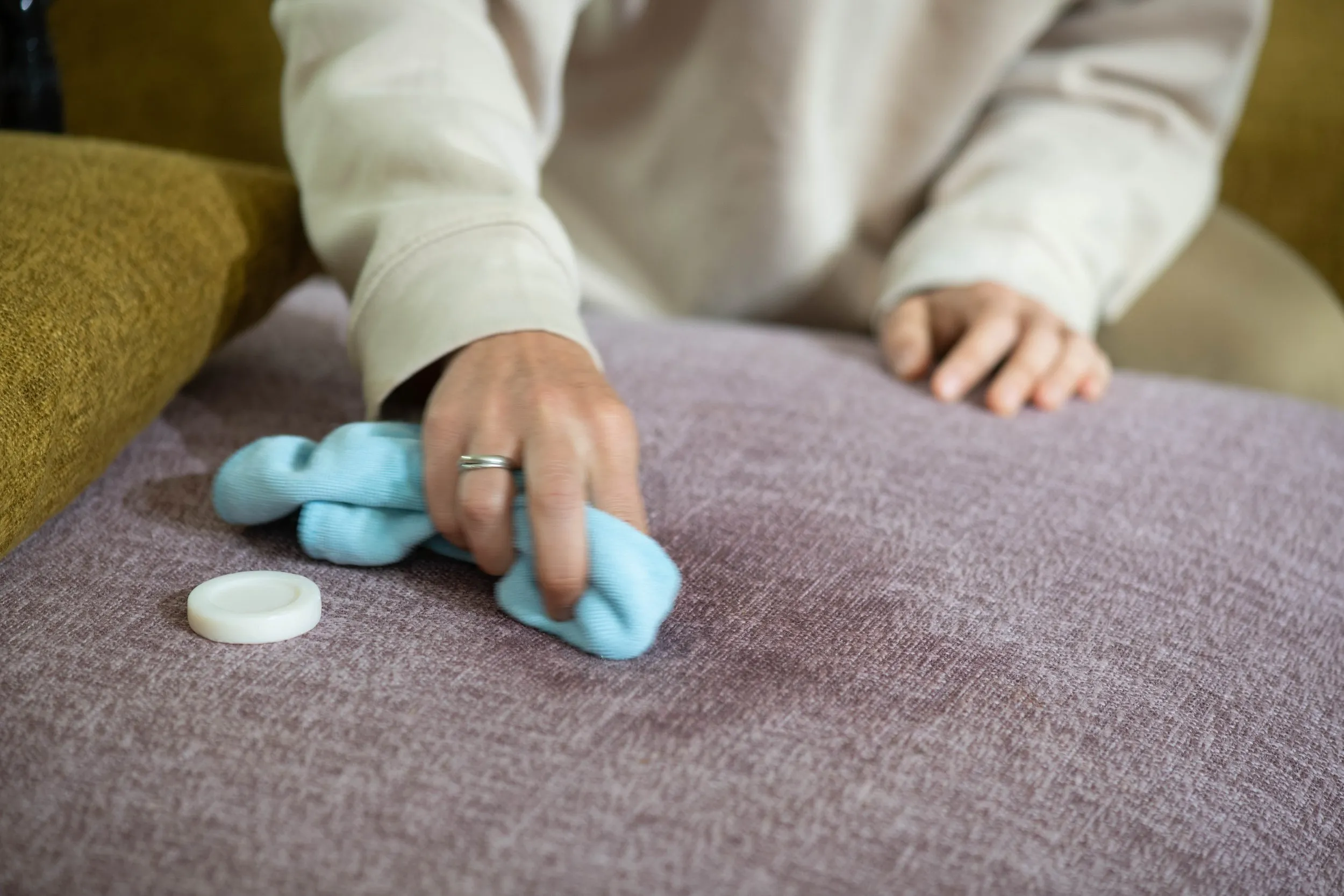
- Microfiber Cloths: These are gentle on fabric and great for blotting stains without damaging the material or leaving lint behind.
- Soft-Bristle Brush: This helps loosen dirt from fabric fibres without harming delicate materials like velvet or cotton.
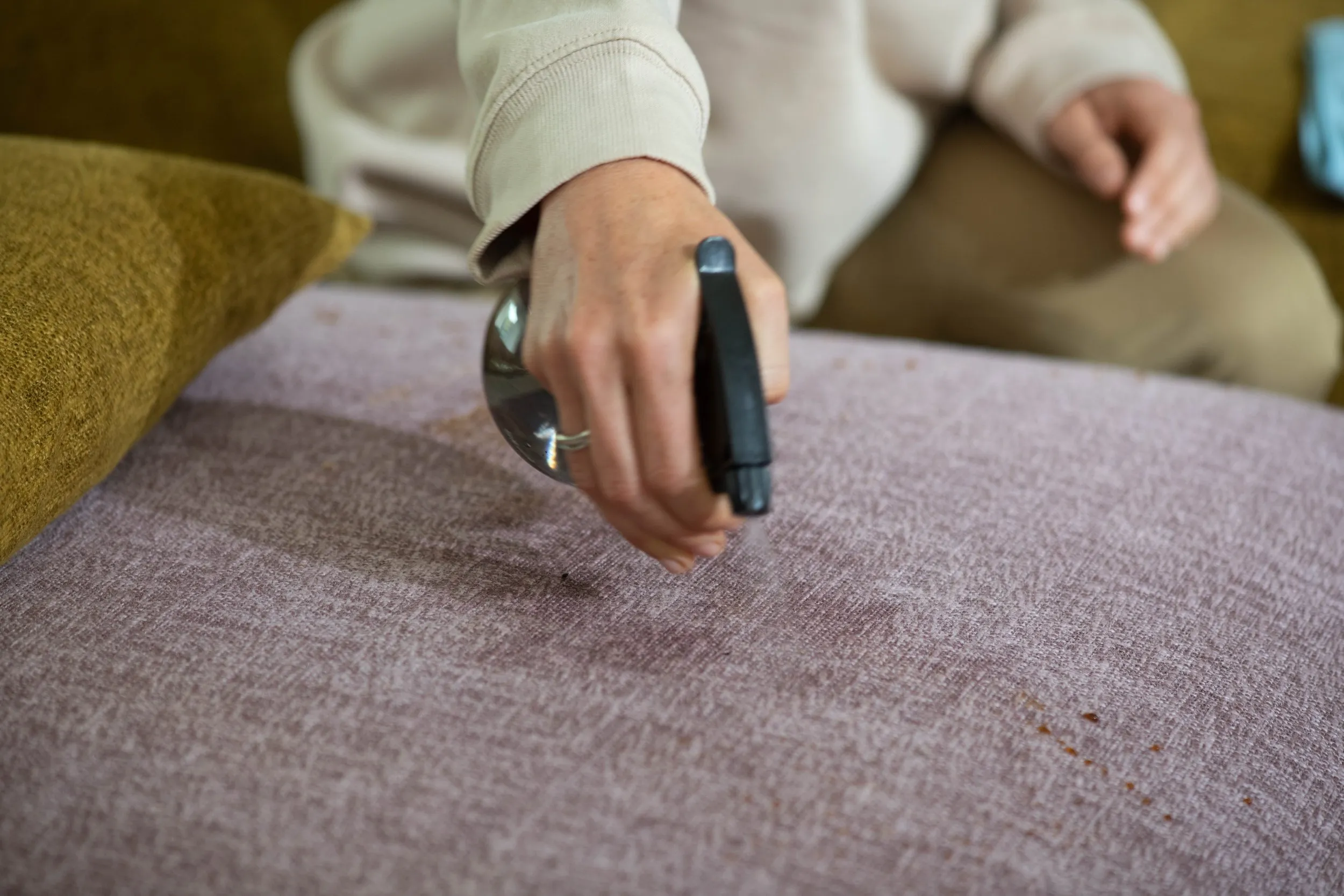
- Spray Bottle: A spray bottle lets you apply your sofa cleaner evenly, preventing the fabric from becoming too wet.
- Measuring Cups and Spoons: These are essential for mixing DIY cleaning solutions just right.
- Protective Gloves: Gloves keep your hands safe, especially when using cleaning agents with chemicals.
Recommended Cleaning Agents for Stubborn Sofa Stains
- Mild Dish Soap: Gentle yet effective, it works wonders on water-safe fabrics, helping to break down grease and food stains.
- White Vinegar: A natural disinfectant that’s brilliant at lifting stains from fabric sofas.
- Baking Soda: A mild abrasive and great deodoriser, it helps absorb oils and removes unpleasant smells.
- Hydrogen Peroxide: Perfect for lightening stubborn stains like wine or ink, especially on lighter fabrics (always test first).
- Rubbing Alcohol: Great for ink stains and disinfecting, but use carefully on delicate fabrics.
- Commercial Upholstery Cleaner: A good fabric sofa cleaner can provide professional results, tackling tough stains effectively.
- Distilled Water: Using distilled water avoids mineral stains, which is important for delicate fabrics.
Why Having the Right Tools and Cleaners Matters
Using the wrong tools or cleaners can make stains worse or even damage your sofa. For example, scrubbing with a rough brush can harm delicate fabrics, and using water on fabrics that need solvent cleaners can cause discolouration. A targeted sofa cleaner spray or a spot cleaner for the couch ensures stains are treated without harm.
Before you dive into cleaning, always check the cleaning code on your sofa and test the solution on a hidden spot. With the right tools and cleaners, your sofa will stay fresh, clean, and looking great—no matter how dusty or spill-prone the climate gets.
Step-by-Step Guide: How to Remove Common Sofa Stains
Dealing with tough sofa stains can be frustrating, especially when you’re unsure where to start. But with the right approach and cleaning solutions, even the most stubborn spots can be effectively removed. This step-by-step guide will help you tackle the most common sofa stains using simple yet effective methods—whether you’re using a spot cleaner for your couch or a DIY solution.
1. Coffee and Tea Stains
These dark, tannin-based stains can quickly seep into fabric fibres if not treated immediately.
What You’ll Need:
- Mild dish soap
- White vinegar
- Warm water
- Clean microfiber cloth
Steps:
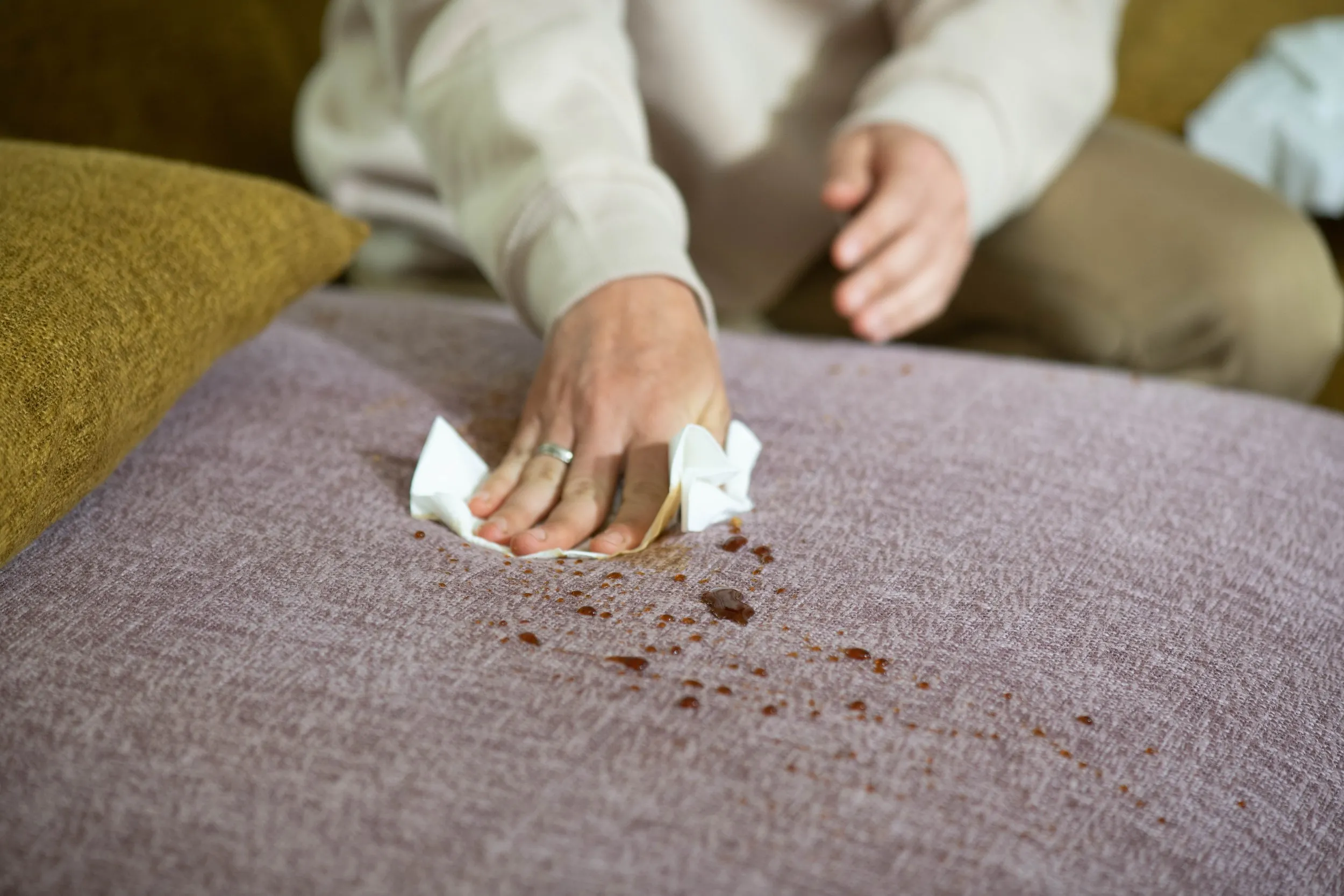
- Blot the Stain: Use a dry cloth to gently blot (not rub) the stain to absorb excess liquid.
- Mix a Solution: Combine one tablespoon of dish soap, one tablespoon of white vinegar, and two cups of warm water.
- Apply the Solution: Dampen a cloth with the mixture and gently dab the stained area.
- Rinse and Dry: Use a clean, damp cloth to rinse the spot, then blot dry with a towel.
Pro Tip: For lingering marks, consider using a specialised sofa cleaner spray designed for fabric upholstery.
2. Ink Stains
Ink stains can be tricky and often require a quick response to prevent permanent damage.
What You’ll Need:
- Rubbing alcohol
- Cotton ball or clean cloth
Steps:
- Blot Gently: Lightly dab the ink stain with a clean, dry cloth—avoid rubbing as it can spread the ink.
- Apply Rubbing Alcohol: Dampen a cotton ball with rubbing alcohol and gently blot the stain.
- Rinse and Dry: Wipe the area with a damp cloth to remove any residue, then pat dry.
Note: Always test rubbing alcohol on a hidden fabric section first, especially for delicate materials.
3. Grease and Oil Stains
These stains are common on couches due to food spills or body oils.
What You’ll Need:
- Baking soda or cornstarch
- Vacuum cleaner
- Dish soap
Steps:
- Absorb the Grease: Sprinkle baking soda or cornstarch on the stain and let it sit for 15–20 minutes to absorb excess oil.
- Vacuum: Use a vacuum cleaner to remove the powder.
- Clean the Area: Mix a solution of warm water and dish soap, then dab the area using a clean cloth.
- Rinse and Dry: Wipe with a damp cloth and let it air dry.
4. Red Wine Stains
Wine stains can quickly soak into the fabric, leaving a deep stain if not treated immediately.
What You’ll Need:
- Salt
- White vinegar
- Dish soap
- Cold water
Steps:
- Blot the Spill: Absorb as much liquid as possible using a clean cloth.
- Cover with Salt: Pour salt over the stain to draw out the moisture; leave it for 10–15 minutes.
- Rinse with Cold Water: Gently blot with a cloth soaked in cold water.
- Apply Cleaning Solution: Mix one tablespoon of dish soap with one tablespoon of white vinegar in two cups of cold water. Dab the solution onto the stain.
- Rinse and Dry: Blot with a damp cloth and let the fabric air dry.
5. Pet Stains and Odors
Pet accidents can leave behind stains and persistent odours if not handled properly.
What You’ll Need:
- White vinegar
- Baking soda
- Enzyme cleaner (optional for tough stains)
Steps:
- Blot Immediately: Remove as much of the mess as possible with a paper towel.
- Apply Vinegar Solution: Mix equal parts white vinegar and water and apply to the stain.
- Sprinkle Baking Soda: After applying the vinegar solution, sprinkle baking soda on the area to neutralise odours.
- Let It Sit: Allow it to dry completely, then vacuum up the baking soda residue.
- Use an Enzyme Cleaner: For persistent stains, an enzyme-based sofa cleaner spray can break down organic matter effectively.
6. Blood Stains
Blood stains can be stubborn and should be treated with cold water immediately.
What You’ll Need:
- Cold water
- Dish soap
- Hydrogen peroxide (for light fabrics)
Steps:
- Blot with Cold Water: Use a damp cloth to blot the stain, avoiding warm water as it can set the stain.
- Apply Dish Soap Solution: Mix a tablespoon of dish soap with cold water and dab gently.
- Use Hydrogen Peroxide (Optional): For light-coloured fabrics, apply a small amount of hydrogen peroxide for tougher stains.
- Rinse and Dry: Dab with a clean, damp cloth and let it air dry.
7. Chocolate Stains
Chocolate stains can harden and become difficult to remove if not treated quickly.
What You’ll Need:
- Spoon or dull knife
- Dish soap
- Warm water
Steps:
- Scrape Off Excess: Gently scrape away any dried chocolate without pushing it deeper into the fabric.
- Apply Cleaning Solution: Mix dish soap with warm water and blot the stained area with a clean cloth.
- Rinse and Dry: Use a damp cloth to rinse and let it air dry naturally.
Final Tips for Successful Stain Removal
- Always test cleaning solutions on an inconspicuous area first.
- Act quickly—the faster you address a stain, the easier it is to remove.
- Avoid scrubbing, as it can damage delicate fabrics and set the stain deeper.
- If stains persist, consider hiring professional cleaning services for deep and effective results.
With this comprehensive guide and the right spot cleaner for your couch, you can tackle any stubborn stain while keeping your sofa looking fresh and clean.
Professional Sofa Cleaning Services in Dubai
While regular DIY maintenance can help keep your sofa looking fresh, tough stains, deep-seated dirt, and lingering odours sometimes require professional expertise. That’s where professional sofa cleaning services come in. Using advanced equipment, specialized cleaning agents, and expert techniques, professional cleaners can breathe new life into your sofa, extending its lifespan and ensuring a healthier living environment.
Why Opt for Professionals?
The climate, with its dust, humidity, and occasional sandstorms, can take a toll on your furniture. Here’s why professional cleaning is the best solution for your sofa:
- Deep Cleaning Expertise: Professionals use industrial-grade machines and sofa-specific cleaner sprays to deeply penetrate the fabric, lifting stubborn stains and hidden dirt.
- Fabric-Specific Solutions: Different fabrics require unique cleaning methods. Professionals understand fabric cleaning codes and adapt their techniques accordingly.
- Allergen Removal: Deep cleaning eliminates allergens like dust mites, pet dander, and bacteria that can trigger allergies and respiratory issues.
- Restoration of Appearance: Professional services can restore faded colours, remove odours, and bring your sofa back to life.
- Time and Effort Saving: Hiring professionals save time and energy, achieving superior results that are often difficult to match with DIY methods.
What Does a Professional Sofa Cleaning Include?
It includes several detailed steps to ensure a spotless finish:
- Pre-Inspection: Experts evaluate your sofa’s fabric type, condition, and any stains, helping them choose the best cleaning method.
- Vacuuming: Powerful vacuums remove surface dust, dirt, and debris, preparing the sofa for deeper cleaning.
- Spot Treatment: Stubborn stains like wine, ink, or grease are treated with targeted spot cleaners to break down and lift the marks.
- Deep Cleaning: Methods like hot water extraction, steam cleaning, or foam cleaning are used based on your sofa’s material and level of dirt.
- Deodorising and Sanitizing: Professional-grade deodorisers eliminate odours, while antibacterial treatments ensure a hygienic environment.
- Fabric Protection (Optional): Many services offer fabric protection treatments to repel future stains and spills, keeping your sofa cleaner for longer.
- Final Inspection: A final thorough check ensures your sofa is spotless, fresh, and restored to its best condition.
How to Choose the Best Cleaning Services
With so many options, here’s what to look for when choosing a reliable cleaning service:
Experience and Expertise: Choose a company with years of experience in cleaning various sofa fabrics.
Eco-Friendly Products: Look for services that use non-toxic, eco-friendly cleaning agents.
Customer Reviews: Check reviews and testimonials to gauge customer satisfaction.
Certified Technicians: Ensure the cleaning staff is trained and certified in proper cleaning techniques.
Transparent Pricing: Select a service that offers upfront pricing with no hidden fees.
How Often Should You Hire a Professional Sofa Cleaner?
For most households, scheduling professional cleaning at least once every 6 to 12 months is recommended. However, if you have pets, children, or allergy sufferers, cleaning every 3 to 6 months can help maintain a healthier home environment.
Benefits of Regular Professional Cleaning
🛋️ Extends the lifespan of your sofa
🌿 Improves indoor air quality
💎 Restores your sofa’s original appearance
🚫 Removes allergens and bacteria
🏡 Creates a fresher, cleaner living space
Final Thoughts
Investing in professional cleaning is not just about keeping your couch clean—it’s about creating a healthier, more comfortable living environment. Whether you’re dealing with stubborn stains, dust accumulation, or unwanted odours, expert cleaners have the tools and knowledge to make your sofa look and feel like new.
For deep, long-lasting results, professional cleaning is the best choice to keep your furniture looking its best year-round.
Preventative Measures: Protecting Your Sofa from Future Stains
Keeping your sofa looking fresh and stain-free is about more than just cleaning—it’s also about prevention. In a dusty and hot climate, taking proactive measures can help extend the life of your sofa and reduce the frequency of deep cleaning. With a few smart strategies, you can protect your sofa from spills, stains, and daily wear and tear. Here are some effective preventative measures to help safeguard your sofa:
Apply a Fabric Protector Spray
One of the most efficient ways to prevent stains is by using a fabric protector spray. These sprays form a protective barrier on the fabric, making it more resistant to liquids and dirt.
How to Apply:
- Choose a fabric-specific protector that suits your sofa material.
- Lightly spray the entire surface in a well-ventilated area.
- Let it dry completely before using the sofa again.
Tip: Reapply the protector every 6 months for consistent protection.
Use Sofa Covers and Throws
Sofa covers and decorative throws not only enhance the look of your sofa but also provide excellent protection against stains, spills, and pet hair.
Benefits:
- Easy to remove and wash regularly.
- Acts as a barrier against spills and dirt.
- Available in various colours and styles to complement your décor.
Set House Rules Around Food and Drinks
One of the easiest ways to avoid stains is by limiting where food and drinks are consumed in your home.
Simple Rules to Prevent Spills:
- No eating or drinking on the sofa.
- Keep drinks on side tables or use spill-proof cups.
- Encourage children to eat at the dining table.
Regular Vacuuming and Dusting
Frequent vacuuming helps eliminate dust, crumbs, and dirt that can lead to stains over time, especially in Dubai’s sandy environment.
Cleaning Routine:
- Vacuum your sofa at least once a week with an upholstery attachment.
- Pay extra attention to crevices and seams where dust tends to accumulate.
- For leather sofas, wipe down with a soft, damp cloth to prevent buildup.
Keep Pets Off the Sofa or Use Pet Covers
If you have pets, consider training them to stay off the sofa or use a washable pet cover to avoid fur, stains, and scratches.
Pet-Proofing Tips:
- Place a pet blanket or cover in areas your pets frequent.
- Regularly brush your pets to minimise shedding.
- Clean any accidents immediately with a spot cleaner for the couch.
Address Spills Immediately
Acting quickly is crucial in preventing spills from becoming permanent stains.
Immediate Spill Response:
- Blot (never rub) the spill with a clean, dry cloth.
- Use a mild sofa cleaner spray to treat the affected area.
- Let the spot air dry completely before using the sofa again.
Rearrange Furniture to Avoid Sun Exposure
Prolonged exposure to direct sunlight can cause the fabric to fade, especially in intense heat.
Sunlight Protection Tips:
- Place your sofa away from windows or areas with direct sunlight.
- Use sheer curtains or UV-protective window films.
- Apply a fabric-friendly UV protector for extra defence.
Schedule Professional Sofa Cleaning Regularly
Even with preventative measures, professional cleaning ensures your couch remains fresh and hygienic.
Recommended Cleaning Schedule:
- Every 6 to 12 months for general upkeep.
- Every 3 to 6 months if you have children, pets, or allergy sufferers.
Final Thoughts
Preventing stains is just as important as knowing how to clean stubborn spots. By applying protective sprays, using covers, and acting quickly on spills, you can keep your sofa looking clean and fresh for years to come. In a dynamic city, where dust and heat can be tough on your furniture, these preventative measures are key to maintaining your sofa’s beauty and longevity.
Conclusion
Maintaining a clean and stain-free sofa doesn’t have to be a daunting task. With the right knowledge, tools, and preventative measures, you can effectively handle tough stains and extend the life of your furniture. From understanding fabric cleaning codes to selecting the best fabric sofa cleaner for specific stains, a proactive approach will keep your sofa fresh, comfortable, and looking great.
While DIY solutions and regular upkeep are essential, professional cleaning services sometimes become a must—especially in a vibrant city, where dust, humidity, and daily wear can take a toll. Investing in professional cleaning ensures your couch receives the deep care it needs to stay in excellent condition.
By combining expert tips with consistent maintenance and timely professional services, you’ll enjoy a fresh-smelling, spotless, and cosy sofa year-round.